교과서 질문
Calculate the energy difference between each pair of conformations shown by drawing and comparing Newman projections down the indicated bonds in each.
(b)
1229
views

 Mullins 1st EditionCh. 3 - Alkanes and Cycloalkanes: Properties and Conformational Analysis문제 60e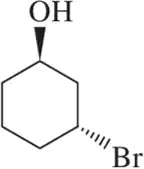
 검증된 단계별 안내
 03:29
03:29
 04:02
04:02 05:12
05:12Calculate the energy difference between each pair of conformations shown by drawing and comparing Newman projections down the indicated bonds in each.
(b)
What is the mistake that was made in drawing each of the flipped chairs on the right from the chair on the left? [In these, assume that the angle through which you view the chair conformations doesn't change.]
(a)
For each pair of conformations shown, choose which is most stable. If both are equally stable, then write 'no difference.' [If both conformations have the same number of axial substituents, choose the one with the smallest axial substituents.]
(e)
For each pair of conformations shown, choose which is most stable. If both are equally stable, then write 'no difference.' [If both conformations have the same number of axial substituents, choose the one with the smallest axial substituents.]
(g)
For each structure shown, draw the two chair conformations and choose which is most stable. Be sure that your second chair is the flipped version of the first. [Make sure that wedged substituents are up in the chair, regardless of whether up is equatorial or axial.]
(g)
In contrast to ethane and other alkanes studied in this chapter, there is no free rotation around any bonds in cyclopentane (shown below). Why?