Ch. 4 - Acids and Bases/Electron Flow
Mullins - Organic Chemistry: A Learner Centered Approach 1st Edition
Mullins1st EditionOrganic Chemistry: A Learner Centered ApproachISBN: 9780137566471당신이 사용하는 게 아니라요?교과서 변경
3장, 문제 66e

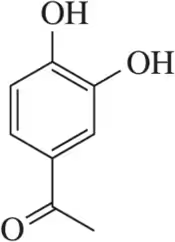
For each of the following molecules, predict the product that would form upon reaction of a single equivalent of a strong base.
(e)

검증된 단계별 안내
1
Analyze the structure of the molecule: The molecule contains a benzene ring with two hydroxyl (-OH) groups in the ortho position and a nitro group (-NO2) attached to the ring.
Identify the acidic protons: The hydroxyl groups (-OH) are acidic due to the ability of the oxygen atom to donate a proton. The nitro group is electron-withdrawing, which increases the acidity of the hydroxyl groups by stabilizing the negative charge on the conjugate base.
Determine the effect of a strong base: A strong base will deprotonate one of the hydroxyl groups, forming a phenoxide ion (-O⁻). The base will preferentially deprotonate the more acidic hydroxyl group, which is influenced by the electron-withdrawing nitro group.
Predict the product: The reaction will result in the formation of a phenoxide ion at the position of the deprotonated hydroxyl group. The nitro group will remain unchanged, and the other hydroxyl group will remain protonated.
Consider resonance stabilization: The phenoxide ion formed will be stabilized by resonance, where the negative charge on the oxygen can delocalize into the aromatic ring. The nitro group further stabilizes the resonance structure by withdrawing electron density.

비슷한 문제에 대한 검증된 영상 답변:

이 영상 해법은 위 문제에 도움이 된다고 튜터들이 추천한 것입니다.
영상 길이:
10m
도움이 되었나요?

주요 개념

질문에 올바르게 답하기 위해 반드시 이해해야 하는 핵심 개념들은 다음과 같습니다.

Strong Bases

Strong bases are substances that can completely dissociate in solution to produce hydroxide ions (OH-). Common examples include sodium hydroxide (NaOH) and potassium hydroxide (KOH). In organic chemistry, strong bases are often used to deprotonate acidic functional groups, leading to the formation of reactive intermediates such as alkoxides or carbanions.
추천 영상:
03:10
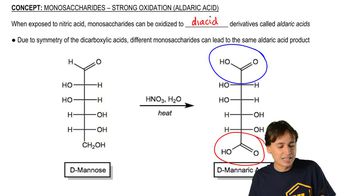
Monosaccharides - Strong Oxidation (Aldaric Acid)

Acid-Base Reactions

Acid-base reactions involve the transfer of protons (H+) from an acid to a base. In the context of organic molecules, hydroxyl groups (-OH) can act as weak acids, donating a proton to a strong base. This reaction can lead to the formation of alkoxide ions, which are important in various organic reactions, including nucleophilic substitutions and eliminations.
추천 영상:
02:49
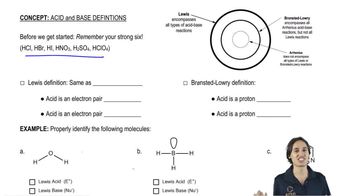
The Lewis definition of acids and bases.

Functional Groups

Functional groups are specific groups of atoms within molecules that are responsible for the characteristic chemical reactions of those molecules. In the provided structure, the hydroxyl (-OH) and amine (-NH) groups are functional groups that can participate in acid-base reactions. Understanding the reactivity of these groups is crucial for predicting the products of reactions involving strong bases.
추천 영상:
02:36
Identifying Functional Groups