
Ch. 8 - Alkenes 1: Properties and Electrophilic Additions
Mullins - Organic Chemistry: A Learner Centered Approach 1st Edition
Mullins1st EditionOrganic Chemistry: A Learner Centered ApproachISBN: 9780137566471당신이 사용하는 게 아니라요?교과서 변경
7장, 문제 43

When combining isoprene equivalents, IPP is never the electrophile. Why might this be? What is special about DPP that allows it to function better as an electrophile? [Draw the carbocation that each becomes.]

검증된 단계별 안내
1
Understand the structure of isoprene equivalents: Isopentenyl pyrophosphate (IPP) and dimethylallyl pyrophosphate (DPP) are both isoprene derivatives used in biosynthetic pathways. IPP has a double bond in the terminal position, while DPP has a double bond in the internal position.
Analyze the electrophilic nature of DPP: DPP can form a more stable carbocation upon protonation or pyrophosphate group departure. The internal double bond in DPP allows for resonance stabilization of the resulting carbocation, making it a better electrophile.
Compare the carbocation stability: When IPP loses its pyrophosphate group, the resulting carbocation is less stable because it lacks resonance stabilization. In contrast, the carbocation formed by DPP is stabilized by resonance, as the positive charge can delocalize over the adjacent carbon atoms.
Draw the carbocations: For IPP, the carbocation formed is a primary carbocation, which is inherently less stable. For DPP, the carbocation formed is a secondary allylic carbocation, which benefits from resonance stabilization. Use MathML to represent the structures clearly.
Conclude why IPP is not the electrophile: IPP is less reactive as an electrophile due to the instability of its carbocation. DPP, with its resonance-stabilized carbocation, is better suited to act as the electrophile in reactions involving isoprene equivalents.

비슷한 문제에 대한 검증된 영상 답변:

이 영상 해법은 위 문제에 도움이 된다고 튜터들이 추천한 것입니다.
도움이 되었나요?

주요 개념

질문에 올바르게 답하기 위해 반드시 이해해야 하는 핵심 개념들은 다음과 같습니다.

Isoprene Units and Their Role in Organic Chemistry

Isoprene units are the building blocks of many natural compounds, particularly terpenes and terpenoids. Each isoprene unit consists of a five-carbon structure with a specific arrangement of double bonds. Understanding how these units combine is crucial for grasping the mechanisms of reactions involving them, particularly in biosynthesis and polymerization processes.
추천 영상:
02:24
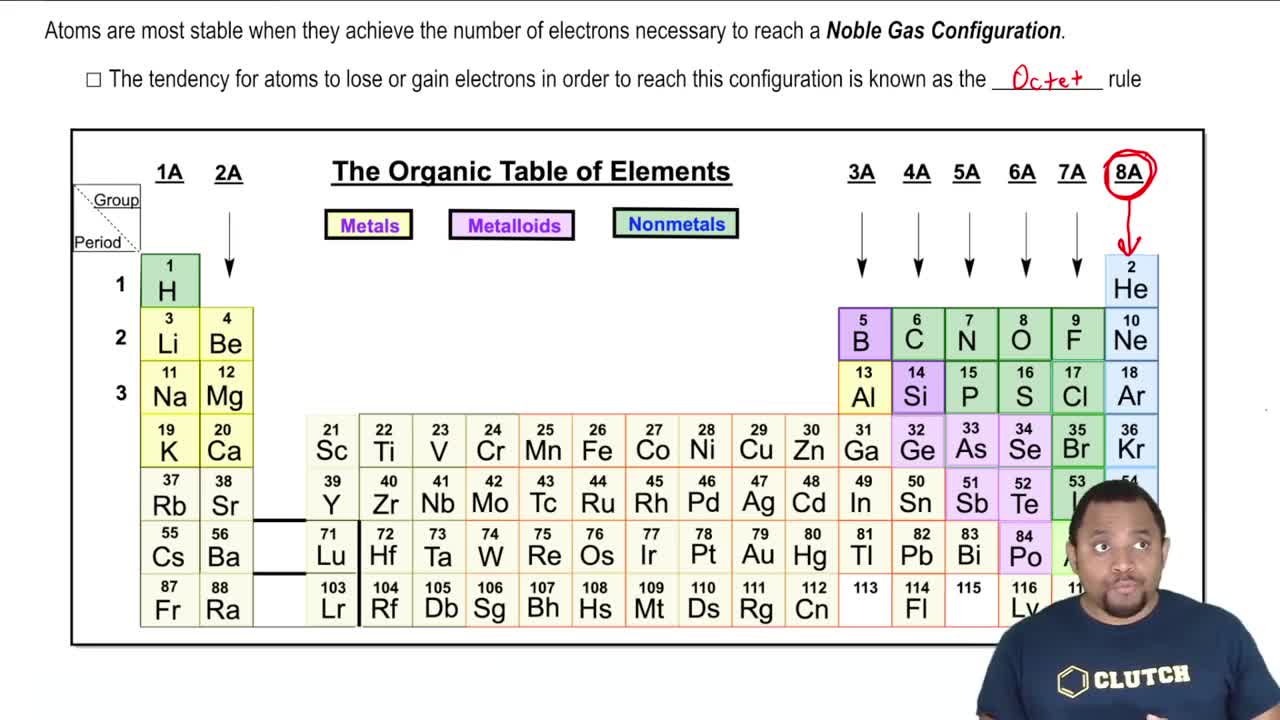
The most important parts of the periodic table for organic chemistry

Electrophiles and Nucleophiles

In organic chemistry, electrophiles are species that accept electron pairs from nucleophiles during chemical reactions. Electrophiles are typically positively charged or electron-deficient, making them reactive towards nucleophiles, which are electron-rich. Recognizing the roles of electrophiles and nucleophiles is essential for predicting reaction pathways and understanding the stability of intermediates like carbocations.
추천 영상:
03:
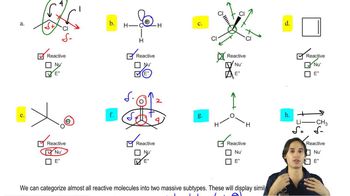
Nucleophile or Electrophile

Carbocation Stability

Carbocations are positively charged carbon species that play a key role in many organic reactions. Their stability is influenced by factors such as the degree of substitution (primary, secondary, tertiary) and resonance effects. A more stable carbocation is more likely to form and persist during a reaction, making it crucial to analyze the structure of intermediates when considering the reactivity of isoprene derivatives.
추천 영상:
05:58
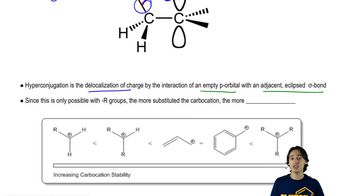
Determining Carbocation Stability