Ch. 8 - Microbial Metabolism
Chapter 8, Problem 7

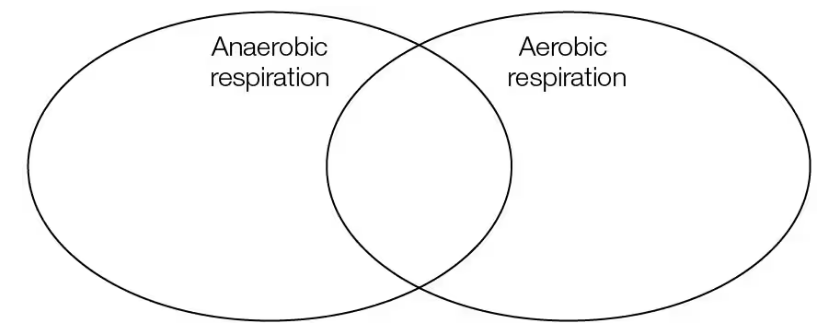
Draw and then fill out a Venn diagram (see sample version here) that compares and contrasts anaerobic respiration to aerobic respiration. The middle section of the diagram is where you should list the features these processes have in common. Include as many details as possible in this diagram to make this a useful exercise.
Venn diagram with two overlapping circles labeled Anaerobic respiration and Aerobic respiration for comparing features.

Verified step by step guidance
1
Step 1: Begin by drawing two overlapping circles to create a Venn diagram. Label one circle 'Anaerobic Respiration' and the other 'Aerobic Respiration'. The overlapping area will represent features common to both processes.
Step 2: In the 'Anaerobic Respiration' circle, list characteristics unique to anaerobic respiration. For example, note that it does not require oxygen, uses alternative electron acceptors (like nitrate or sulfate), produces less ATP compared to aerobic respiration, and often results in byproducts such as lactic acid or ethanol.
Step 3: In the 'Aerobic Respiration' circle, include features unique to aerobic respiration. Mention that it requires oxygen as the final electron acceptor, produces a higher yield of ATP, and typically results in carbon dioxide and water as byproducts.
Step 4: In the overlapping middle section, write the features common to both processes. These include the use of an electron transport chain, generation of ATP through oxidative phosphorylation, involvement of glycolysis and the Krebs cycle (though the extent may vary), and the overall goal of converting energy stored in glucose into usable cellular energy.
Step 5: Review your Venn diagram to ensure it includes detailed biochemical steps, energy yield differences, electron acceptors, and byproducts. This comprehensive comparison will help solidify your understanding of how these two respiration types relate and differ.

Verified video answer for a similar problem:

This video solution was recommended by our tutors as helpful for the problem above.
Video duration:
2m
Was this helpful?

Key Concepts

Here are the essential concepts you must grasp in order to answer the question correctly.

Aerobic Respiration

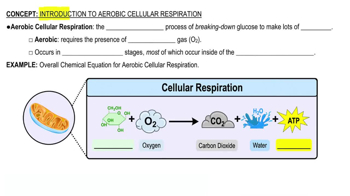
Aerobic respiration is a metabolic process that uses oxygen as the final electron acceptor to produce energy. It involves glycolysis, the Krebs cycle, and the electron transport chain, generating up to 36-38 ATP molecules per glucose. This process is efficient and common in many organisms, including humans.
Recommended video:
Guided course
05:11
Introduction to Aerobic Cellular Respiration

Anaerobic Respiration

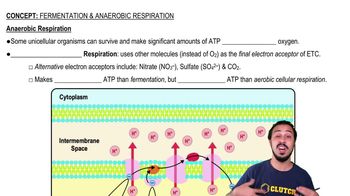
Anaerobic respiration occurs in the absence of oxygen, using alternative electron acceptors like nitrate or sulfate. It produces less energy than aerobic respiration, typically yielding fewer ATP molecules. This process is found in certain bacteria and archaea adapted to oxygen-poor environments.
Recommended video:
Guided course
03:35
Anaerobic Respiration

Comparison of Metabolic Pathways

Both aerobic and anaerobic respiration start with glycolysis and involve electron transport chains, but differ in their final electron acceptors and energy yield. They share the goal of generating ATP by oxidizing glucose or other substrates, but vary in efficiency and byproducts formed.
Recommended video:
Guided course
02:17
Introduction to Metabolism