Ch. 2 - General Chemistry Translated: Finding the Electrons
Mullins - Organic Chemistry: A Learner Centered Approach 1st Edition
Mullins1st EditionOrganic Chemistry: A Learner Centered ApproachISBN: 9780137566471Not the one you use?Change textbook
Chapter 1, Problem 63a

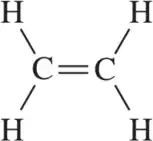
In the following molecules, identify all pushable electron pairs.
(a) Structural diagram of a molecule with two carbon atoms connected by a double bond, surrounded by hydrogen atoms.

Verified step by step guidance
1
Step 1: Understand the concept of 'pushable electron pairs'. These are electron pairs that can participate in resonance or reaction mechanisms. They include lone pairs, π-electrons in double or triple bonds, and electrons in negatively charged species.
Step 2: Examine the molecule provided in part (a). Look for lone pairs on heteroatoms (e.g., oxygen, nitrogen, sulfur) and identify any π-bonds (double or triple bonds) in the structure.
Step 3: Check for any negatively charged atoms in the molecule. Negatively charged atoms often have extra electron density that can be 'pushed' during resonance or reaction mechanisms.
Step 4: Identify the positions of these pushable electron pairs in the molecule. For example, lone pairs on oxygen or nitrogen, π-electrons in a C=C bond, or electrons associated with a negative charge.
Step 5: Clearly mark or highlight all the pushable electron pairs in the molecule, ensuring you account for all possible locations where electron density can be delocalized or moved.

Verified video answer for a similar problem:

This video solution was recommended by our tutors as helpful for the problem above.
Video duration:
1m
Was this helpful?

Key Concepts

Here are the essential concepts you must grasp in order to answer the question correctly.

Electron Pairs

In organic chemistry, electron pairs refer to two electrons that occupy the same molecular orbital. These pairs can be either bonding pairs, which are shared between atoms, or lone pairs, which are not involved in bonding. Understanding the distribution and behavior of these electron pairs is crucial for predicting molecular geometry and reactivity.
Recommended video:
2:56
Base Pairing Concept 1

Resonance Structures

Resonance structures are different ways of drawing the same molecule that illustrate the delocalization of electrons. In molecules with multiple valid Lewis structures, resonance helps to depict how electron pairs can be 'pushed' or shifted between atoms, affecting the molecule's stability and reactivity. Recognizing resonance is essential for identifying pushable electron pairs.
Recommended video:
Guided course
03:04
Drawing Resonance Structures

Nucleophiles and Electrophiles

Nucleophiles are species that donate an electron pair to form a chemical bond, while electrophiles are electron-deficient species that accept an electron pair. Understanding the roles of nucleophiles and electrophiles is vital for analyzing reaction mechanisms and determining which electron pairs can be pushed during chemical reactions.
Recommended video:
Guided course
03:
Nucleophile or Electrophile