Exploring the four Cs: Using future skills to unlock young learners’ potential

Annie Altamirano
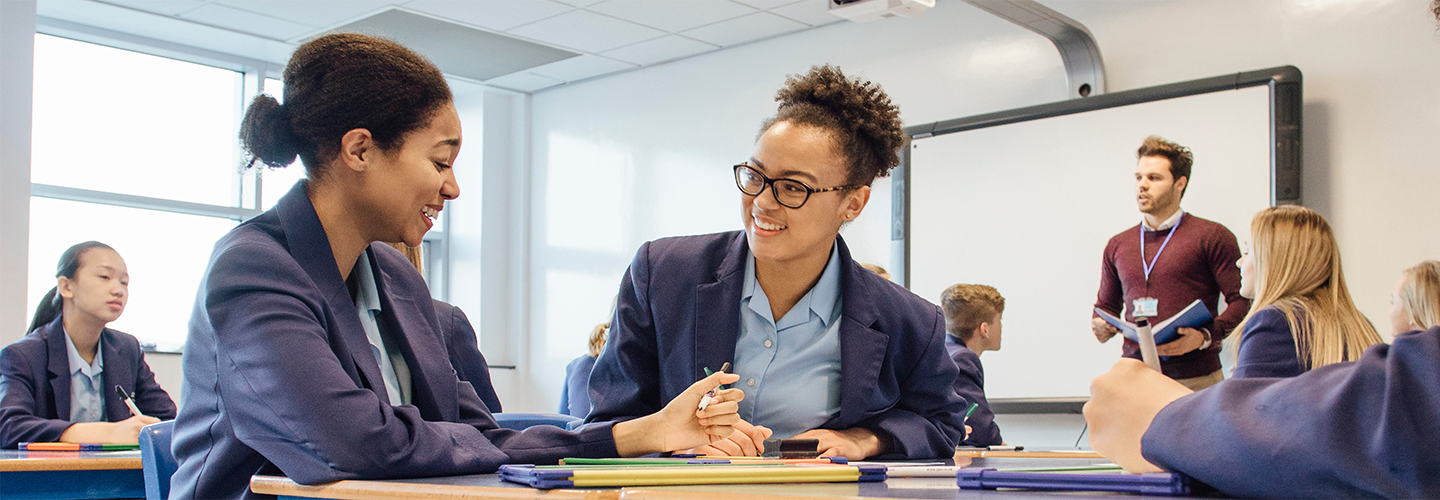
Students sat together in a classroom working together
所要時間: 5 minutes

What do we mean by future skills? 

The skills students will need in their future studies and careers are dramatically different from those required previously. Times are changing rapidly and educational institutions and teachers have a critical role to play in developing those skills in our young learners so that they are able to fulfill their potential and have bright futures ahead of them. 

These skills are referred to as future skills. There is no common consensus on how to define these skills but, broadly speaking, they can be grouped into four categories: 

1. Ways of thinking

Skills in this category include critical thinking, creativity, innovation, problem solving, metacognition and learning skills.

2. Ways of working

Here, we’re talking about the skills of communication and collaboration.

3. Tools for working

Information literacy is an important 21st-century skill, as well as ICT literacy and citizenship, both global and local. 

4. Life skills

The final category covers life and career skills, and is all about personal and social responsibility. 

One way you can encourage young learners to build these skills is through STEAM subjects (that’s science, technology, engineering, arts and math), which will equip them with functional skills such as organizing, planning, cognitive flexibility and self-regulation. 

The four Cs 

The four Cs refer to four important skills for young learners to master: communication, collaboration, critical thinking and creativity. These are essential, not just in an educational context, but in everyday life. 

Falling into the first two categories of future skills (ways of thinking and ways of working), these can help children build confidence and self-esteem. They also encourage healthy emotional development.  

So let’s take a closer look at the theory behind them.

1. Communication

We usually think of communication as speaking and listening, but it’s actually much broader than that. Communication encapsulates telling stories, reading, sharing ideas and experiences, body language, facial expression, eye contact and tone. Children learn to decipher the world around them by learning and practicing these skills.

Strong communication skills, developed early, are directly related to their literacy success. These skills allow children to articulate their thoughts and ideas effectively, and listen to decode meaning. Students then begin to use communication for a range of purposes, and communicate effectively in diverse environments. Furthermore, developing strong patterns of verbal and non-verbal communication also fosters self-esteem and social skills. 

2. Collaboration

Collaboration is how young children begin to build friendships with others. At first, young children will watch what others do and say, before moving on to playing together. As they get older, they become aware of other children’s feelings and ideas. Friendships become motivating and they learn how to make compromises and respect each other’s perspectives and skills. 

Collaboration is enhanced through group work and project-based activities, sharing time with peers. Children thrive when they feel valued by the people around them, not just adults but their peers too. 

3. Creativity

Creativity is a complex concept. Many people think that creativity is being good at painting or drawing, but actually, creativity can manifest itself in a multitude of ways. Some of the key attributes of creative thinking include divergent thinking, imagination, flexibility, and the ability to tolerate ambiguity. 

Children who can express themselves creatively show less frustration and develop a joy of learning. And this expression can take many forms: writing, drama, scientific exploration, and dance and other movement – to name just a few.

Part of creativity is learning to innovate. Innovation is how children test their thinking and how they interact with their world. Creative children are able to create content from their own ideas or other resources. They can use that newly created content to solve problems and participate in creative activities. 

4. Critical thinking

Critical thinking refers to the higher levels of thinking that learners need to enable them to think rationally and effectively about their needs, the best way to do things, identifying links between ideas, analyzing points of view, evaluating arguments, and supporting evidence and reasoning. It’s about thinking in a non-linear, open-ended way, allowing for multiple responses and unspecified answers, and considering issues from various perspectives, challenging assumptions and exploring possible alternatives. 

Critical thinking is not a natural function like sleeping or eating. Children benefit significantly from teaching methods that take the development of their thinking skills seriously. And when children start applying critical thinking skills, they’ll begin to enjoy more challenging tasks. 

Five steps to the four Cs

So how can teachers plan their lessons to develop these four skills in their young learners? There are five steps that provide a framework that challenges and stimulates students: 

1. Determine learning objectives and define behaviors that learners should exhibit

Think about the purpose of your lesson. What new concept or information do you want your students to absorb? And what learning behaviors do you want to elicit from them? Clarifying these aims before your lesson will help you to measure its success afterwards. 

2. Model a new concept and encourage students to think critically and creatively through questioning

It’s important for the teacher to plan significant questions and give students time to respond. Follow up on those responses by asking probing questions and periodically summarizing key points of the discussion. There are various types of questions you can use in class: 

  • Clarification questions, for example, What do you mean? Can you explain that more? Could you put that in another way? 
  • Assumption questions, for example, Why do you think so? Would you make this assumption? 
  • Evidence questions, for example, Can you give me an example? Do you think this is true? 
  • Origin or source questions, for example, Where did you get that idea? Is this your own idea or did you hear it from someone else? 
  • Consequence questions, for example, What effect would that have? What would the implications be? What alternatives could there be? 
  • Viewpoint questions, for example, How are these ideas different? How would different groups of people respond? 

It’s important to include as many students as possible in the discussion. In this way, they are more likely to communicate with each other and discover knowledge on their own. 

3. Choose activities that promote active learning 

One activity that typically receives a positive response is the KWL approach. Create a table with three columns:

  • K = what students know 
  • W = what they want to know 
  • L = what they have learned

Once the class has completed the first two columns, you can put the table aside until the end of the lesson or the topic. Then complete the final column as a way of reviewing everything that has been covered in the lesson. 

Also, try think-pair-share activities. Assign students short tasks to complete individually. Just make sure that they prompt learners to come up with creative responses. Once students have had an opportunity to think critically and creatively about the concept, they can share their ideas with a partner before sharing with the whole class. 

4. Prompt communication and collaboration, and give students an opportunity to review and refine their ideas 

Moving into larger groups, learners can share their work, accept different perspectives and defend their own point of view. Presenting to one another and answering questions will prompt them to review and refine their ideas before the final step in the process.

5. Learners present their work, getting feedback and creating an opportunity for self-assessment 

Depending on the type of work you’re doing, presenting could be as simple as sharing answers to questions or giving a project presentation with a group spokesperson. Encourage the other members of the class to ask questions and provide feedback, as well as giving your own feedback. Then, encourage learners to reflect on their participation in the lesson.

More blogs from Pearson

  • Friends stood by a camper van with food by the sea socialising
    How to maintain language skills over summer break
    投稿者 Charlotte Guest
    所要時間: 3 minutes

    Summer break is a welcome chance to relax, but it can also be a challenging time for students. Without regular classes over the summer, many students notice that their vocabulary, grammar and speaking confidence begin to fade: this is often called the "summer slide".. The good news is that maintaining language skills over summer break does not require hours of study each day. Small, consistent habits can help you retain what you have learned and return to your studies with confidence.

    Why language learners forget so much during summer break

    When we stop using a language regularly, our brains begin to forget information that is not being reinforced. Vocabulary becomes harder to recall, grammar rules feel less familiar and speaking confidence can decrease.

    Fortunately, language retention does not require intensive study. The key is maintaining regular contact with the language, even for just a few minutes a day.

  • Students sat together talking
    Mindfulness in the classroom: Autopilot and paying attention
    投稿者 Amy Malloy
    所要時間: 4 minutes

    In today's digital world, students face constant distractions that can make it difficult to stay focused during lessons. From social media notifications to endless online content, maintaining attention has become one of the biggest challenges in modern education.

    This is where mindfulness in the classroom can make a significant difference. By helping students become more aware of the present moment, mindfulness can strengthen concentration, improve learning outcomes, and support overall wellbeing.

    What is "Autopilot" thinking?

    Have you ever reached the end of a page in a book and realized you can't remember what you just read?

    This experience occurs when the brain slips into a semi-conscious state, often referred to as "autopilot" mode. During autopilot, we continue carrying out tasks while our thoughts drift elsewhere, planning future events, worrying about problems or replaying past experiences.

    While this automatic mode helps us complete routine tasks efficiently, it can also reduce our awareness of what's happening right now. As a result, students may appear present in class while their attention is elsewhere.

    For educators, understanding this tendency is essential because sustained attention is critical for learning, memory formation and academic success.

    Why mindfulness matters in education

    According to mindfulness expert Jon Kabat-Zinn, mindfulness means:

    "Paying attention in a particular way: on purpose, in the present moment and non-judgmentally."

    The key phrase is "on purpose".

    Mindfulness trains students to deliberately focus their attention rather than allowing their minds to wander automatically. Like any skill, attention becomes stronger with practice. Repeated mindfulness exercises help create neural pathways that support concentration and self-awareness.

    For younger children, this is especially important because the brain develops rapidly during the primary school years. Building healthy attention habits early can have lasting benefits throughout education and beyond.

    Benefits of mindfulness in the classroom

    Implementing mindfulness activities in schools can offer several advantages:

    Improved attention span

    Regular mindfulness practice helps students sustain focus for longer periods, making it easier to engage with lessons, reading tasks and independent study.

    Better learning outcomes

    When students pay closer attention, they absorb and retain information more effectively, leading to stronger academic performance.

    Reduced stress and anxiety

    Mindfulness techniques can help students manage exam pressure, classroom stress and emotional challenges by encouraging calm, focused awareness.

    Stronger emotional regulation

    Students become more aware of their thoughts and feelings, helping them respond thoughtfully rather than react impulsively.

    Enhanced digital wellbeing

    Mindfulness can help counteract the constant distractions created by smartphones, social media and digital devices.

    Why attention skills are more important than ever

    Many educators are concerned about the impact of technology on student concentration. While researchers continue to debate whether overall attention spans are shrinking, there is broad agreement that attention is shaped by habit.

    The brain becomes better at whatever it repeatedly practices.

    If students frequently switch between apps, notifications and multiple streams of information, sustained focus can become more difficult. Conversely, practicing mindful attention strengthens the brain's ability to concentrate on a single task.

    This is particularly important for teenagers. During adolescence, the brain undergoes significant restructuring, strengthening frequently used neural pathways while reducing those that are rarely activated.

    The message is simple: attention is a skill that improves through use.

    Three mindfulness activities for students

    Teachers can introduce mindfulness through simple exercises that fit naturally into the school day.

    1. Mindful technology use

    Help students develop awareness around screen time by encouraging intentional device use.

    Steps:

    1. Pause before using a device.
    2. Notice how you feel.
    3. Decide on a single task to complete.
    4. Visualize the steps required.
    5. Complete the task without distractions.
    6. Put the device away once finished.
    7. Reflect on any urge to continue scrolling.

    2. Mindful eating exercise

    This activity encourages students to engage all their senses and become fully present.

    Ask students to:

    • Observe five things they can see about their snack.
    • Notice five things they can feel.
    • Identify five scents.
    • Slowly taste the food and recognize subtle flavors.
    • Reflect on the experience.

    This exercise develops sensory awareness and helps students practice sustained attention.

    3. Breath counting for focus

    One of the simplest and most effective mindfulness exercises for students.

    Instructions:

    1. Sit comfortably.
    2. Close your eyes or soften your gaze.
    3. Focus on your breathing.
    4. Count each breath from one to ten.
    5. If your mind wanders, gently return attention to the breath.
    6. Repeat as needed.

    Over time, students often find it easier to maintain concentration and remain present.

    How teachers can introduce mindfulness successfully

    Teachers do not need extensive training to begin incorporating mindfulness into lessons. Small, consistent practices often produce the greatest benefits.

    Consider:

    • Starting lessons with a one-minute breathing exercise.
    • Using mindfulness before tests or presentations.
    • Encouraging reflection at the end of lessons.
    • Incorporating mindful listening activities during discussions.
    • Promoting conscious technology use in digital learning environments.

    Consistency is more important than duration. Even a few minutes each day can help students develop stronger focus and self-awareness.

    By helping students move away from autopilot thinking and engage more fully with the present moment, mindfulness supports both academic success and emotional well-being.

    Whether through mindful breathing, mindful eating or conscious technology use, small daily practices can have a lasting impact on how students learn, focus and thrive.

  • A woman studying in a library writing in a book
    Setting boundaries and avoiding burnout as a language learner
    投稿者 Charlotte Guest
    所要時間: 4 minutes

    Learning a new language can be exciting. It can also be challenging. Many language learners feel pressure to study every day, learn quickly and reach fluency as soon as possible.

    This pressure can lead to burnout: a state of physical, mental and emotional exhaustion. When you are burned out, studying becomes difficult, stressful and less enjoyable. The good news is that setting healthy boundaries can help you continue learning while protecting your wellbeing.

    What are boundaries?

    Boundaries are limits that help you take care of yourself. They help you decide how much time, energy and attention you can give to something.

    For example, a boundary might be:

    • Studying for only 20 minutes at a time
    • Taking breaks when you feel overwhelmed
    • Saying no to extra language activities when you are tired
    • Not comparing your progress to other learners

    Boundaries are not signs of weakness. They are tools that help you learn in a sustainable way.

    Understand your energy levels

    Many people experience changes in energy and focus throughout the day. Some days you may feel highly motivated. On other days, even a simple lesson may feel difficult.

    Instead of forcing yourself to follow the same schedule every day, try paying attention to your energy levels.

    Ask yourself:

    • When do I focus best?
    • How long can I study before I feel tired?
    • What activities give me energy?
    • What activities drain my energy?

    You may discover that listening to a podcast feels easy, while studying grammar for an hour feels exhausting. This information can help you create a learning routine that works for you.