Ch. 7 The Nervous System
Marieb - Essentials of Human Anatomy & Physiology 13th Edition
Marieb13th EditionEssentials of Human Anatomy & PhysiologyISBN: 9780135624340Not the one you use?Change textbook
Chapter 7, Problem 11

Neuroglia present in large numbers in areas of bacterial infection in the brain are most likely:
a. Oligodendrocytes
b. Astrocytes
c. Ependymal cells
d. Microglia

Verified step by step guidance
1
Understand the role of neuroglia in the brain: Neuroglia are supportive cells in the nervous system that perform various functions, such as maintaining homeostasis, forming myelin, and providing immune defense.
Review the specific functions of each neuroglial cell type: Oligodendrocytes produce myelin in the central nervous system, astrocytes maintain the blood-brain barrier and provide structural support, ependymal cells line the ventricles and produce cerebrospinal fluid, and microglia act as immune cells by removing pathogens and debris.
Focus on the context of bacterial infection: In cases of bacterial infection in the brain, immune defense is critical. Microglia are specialized for this role as they act like macrophages, engulfing and destroying pathogens.
Eliminate options that are less relevant to immune defense: Oligodendrocytes, astrocytes, and ependymal cells do not primarily function in immune defense against bacterial infections, making microglia the most likely neuroglia involved.
Conclude that microglia are the neuroglia most likely present in large numbers in areas of bacterial infection in the brain due to their immune defense role.

Verified video answer for a similar problem:

This video solution was recommended by our tutors as helpful for the problem above.
Video duration:
2m
Was this helpful?

Key Concepts

Here are the essential concepts you must grasp in order to answer the question correctly.

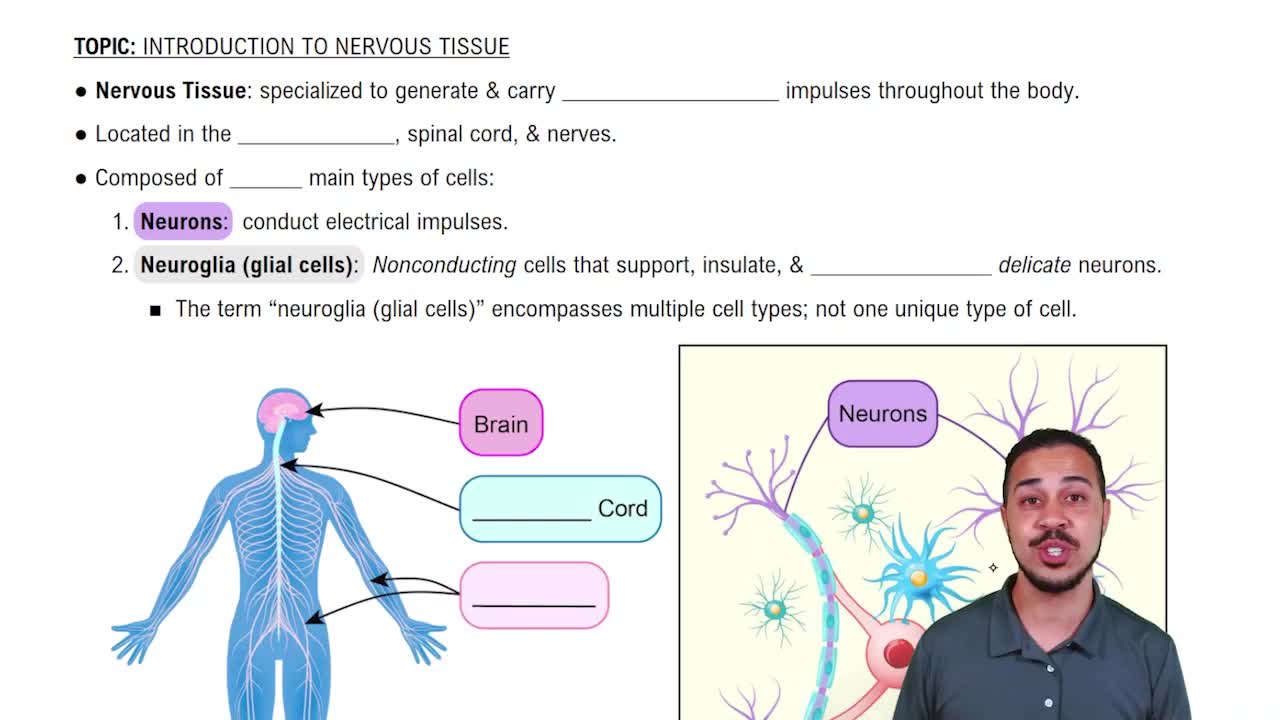
Neuroglia

Neuroglia, or glial cells, are non-neuronal cells in the nervous system that provide support, protection, and nourishment to neurons. They play crucial roles in maintaining homeostasis, forming myelin, and participating in signal transmission. Understanding the different types of neuroglia is essential for recognizing their specific functions in response to brain injuries or infections.
Recommended video:
Guided course
04:36
Intro to Nervous Tissue

Microglia

Microglia are a type of neuroglia that act as the primary immune defense in the central nervous system. They are responsible for monitoring the brain environment, responding to injury, and clearing away debris, including pathogens. In areas of bacterial infection, microglia become activated and proliferate, making them a key focus in understanding neuroinflammatory responses.

Astrocytes

Astrocytes are star-shaped glial cells that provide structural support to neurons, regulate blood flow, and maintain the blood-brain barrier. They also play a role in the response to injury and infection by releasing signaling molecules. While they are abundant in the brain, their specific role in bacterial infections differs from that of microglia, which are more directly involved in immune responses.