Pearson+ LogoPearson+ Logo
Ch. 1 - The Molecular Basis of Heredity, Variation, and Evolution
Sanders - Genetic Analysis: An Integrated Approach 3rd Edition
Sanders3rd EditionGenetic Analysis: An Integrated ApproachISBN: 9780135564172Not the one you use?Change textbook
Chapter 1, Problem 10g

Define each of the following terms:
Chromosome

Verified step by step guidance
1
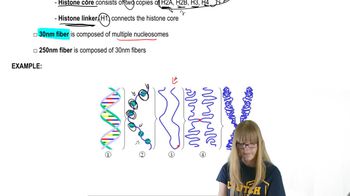
A chromosome is a thread-like structure composed of DNA and proteins, specifically histones, which help in packaging the DNA into a compact, organized form.
Chromosomes are located in the nucleus of eukaryotic cells and carry genetic information in the form of genes.
Each species has a specific number of chromosomes; for example, humans have 46 chromosomes arranged in 23 pairs.
Chromosomes play a critical role in cell division, ensuring that genetic material is accurately replicated and distributed to daughter cells.
In addition to nuclear chromosomes, some organisms, like bacteria, have circular chromosomes, and organelles like mitochondria and chloroplasts also contain their own small circular chromosomes.

Verified video answer for a similar problem:

This video solution was recommended by our tutors as helpful for the problem above.
Video duration:
43s
Was this helpful?

Key Concepts

Here are the essential concepts you must grasp in order to answer the question correctly.

Chromosome Structure

A chromosome is a long, thread-like structure composed of DNA and proteins, which carries genetic information. In humans, chromosomes are organized into 23 pairs, with one set inherited from each parent. Each chromosome consists of a single DNA molecule that is tightly coiled and condensed, allowing it to fit within the nucleus of a cell.
Recommended video:
Guided course
07:10
Chromosome Structure

Chromosomal Function

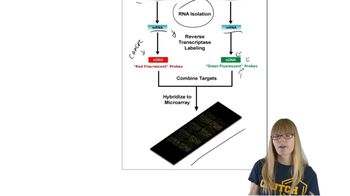
Chromosomes play a crucial role in the storage and transmission of genetic information during cell division. They ensure that DNA is accurately replicated and distributed to daughter cells during mitosis and meiosis. This process is vital for growth, development, and reproduction, as it maintains the integrity of the organism's genetic material.
Recommended video:
Guided course
08:26
Functional Genomics

Chromosomal Abnormalities

Chromosomal abnormalities occur when there is a change in the number or structure of chromosomes, which can lead to genetic disorders. Examples include Down syndrome, caused by an extra copy of chromosome 21, and Turner syndrome, resulting from the absence of one X chromosome in females. Understanding these abnormalities is essential for diagnosing and studying genetic conditions.
Recommended video:
Guided course
07:10
Chromosome Structure