Pearson+ LogoPearson+ Logo
Ch. 1 - The Molecular Basis of Heredity, Variation, and Evolution
Sanders - Genetic Analysis: An Integrated Approach 3rd Edition
Sanders3rd EditionGenetic Analysis: An Integrated ApproachISBN: 9780135564172Not the one you use?Change textbook
Chapter 1, Problem 10e

Define each of the following terms:
Gene

Verified step by step guidance
1
A gene is a fundamental unit of heredity in living organisms. It is a segment of DNA (deoxyribonucleic acid) that contains the instructions for the synthesis of a specific protein or functional RNA molecule.
Genes are located on chromosomes, which are structures within the nucleus of eukaryotic cells or in the cytoplasm of prokaryotic cells.
Each gene consists of a sequence of nucleotides, which are the building blocks of DNA. These nucleotides are arranged in a specific order to encode the information necessary for protein synthesis.
Genes can be expressed (turned on) to produce their corresponding proteins or RNA molecules, which perform various functions in the cell, such as catalyzing biochemical reactions, providing structural support, or regulating other genes.
The expression of genes is regulated by various factors, including environmental signals, regulatory proteins, and epigenetic modifications, ensuring that the correct proteins are produced at the right time and in the appropriate amounts.

Verified video answer for a similar problem:

This video solution was recommended by our tutors as helpful for the problem above.
Video duration:
31s
Was this helpful?

Key Concepts

Here are the essential concepts you must grasp in order to answer the question correctly.

Gene

A gene is a fundamental unit of heredity in living organisms, composed of DNA. It serves as a blueprint for the synthesis of proteins, which perform various functions in the body. Genes are located on chromosomes and can influence traits such as eye color, height, and susceptibility to diseases. Each gene can exist in different forms, known as alleles, which contribute to genetic diversity.
Recommended video:
Guided course
09:09
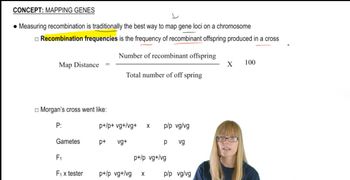
Mapping Genes

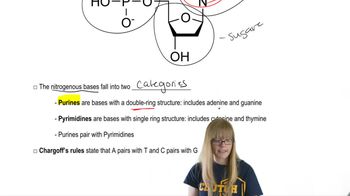
DNA Structure

DNA, or deoxyribonucleic acid, is a double-helix molecule that carries genetic information. It consists of two strands made up of nucleotides, which include a sugar, a phosphate group, and a nitrogenous base. The sequence of these bases (adenine, thymine, cytosine, and guanine) encodes the instructions for building proteins. Understanding DNA structure is crucial for grasping how genes function and are inherited.
Recommended video:
Guided course
06:25
DNA Structure

Alleles

Alleles are different versions of a gene that arise through mutations and can result in variations in traits. For example, a gene for flower color may have a red allele and a white allele. An individual inherits two alleles for each gene, one from each parent, which can be homozygous (same alleles) or heterozygous (different alleles). The combination of alleles determines the expression of traits in an organism.
Recommended video:
Guided course
03:03
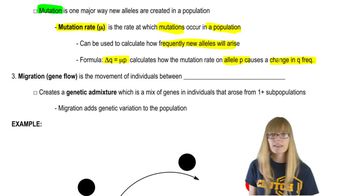
New Alleles and Migration