Pearson+ LogoPearson+ Logo
Ch. 10 - Eukaryotic Chromosome Abnormalities and Molecular Organization
Sanders - Genetic Analysis: An Integrated Approach 3rd Edition
Sanders3rd EditionGenetic Analysis: An Integrated ApproachISBN: 9780135564172Not the one you use?Change textbook
Chapter 10, Problem 7f

From the following list, identify the types of chromosome changes you expect to show phenotypic consequences.
Reciprocal balanced translocation

Verified step by step guidance
1
Understand the concept of a reciprocal balanced translocation: This occurs when two non-homologous chromosomes exchange segments without any genetic material being lost or gained. The total amount of genetic material remains the same, but its arrangement is altered.
Consider the potential impact on gene expression: Even though no genetic material is lost or gained, the rearrangement can disrupt gene function if the breakpoints occur within a gene or regulatory region, potentially leading to phenotypic consequences.
Evaluate the possibility of position effects: The relocation of a gene to a new chromosomal environment can alter its expression due to changes in regulatory elements or chromatin structure, which may result in phenotypic changes.
Assess the impact during meiosis: Individuals with a reciprocal balanced translocation may produce gametes with unbalanced chromosomal content due to improper segregation during meiosis. This can lead to phenotypic consequences in offspring, such as developmental abnormalities or genetic disorders.
Conclude that while individuals with a reciprocal balanced translocation may not always show phenotypic consequences themselves, the rearrangement can still have significant effects on gene function, expression, and reproductive outcomes, making it a type of chromosome change with potential phenotypic consequences.

Verified video answer for a similar problem:

This video solution was recommended by our tutors as helpful for the problem above.
Video duration:
2m
Was this helpful?

Key Concepts

Here are the essential concepts you must grasp in order to answer the question correctly.

Chromosome Structure

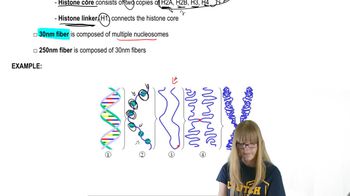
Chromosomes are structures within cells that contain DNA and proteins. They are essential for the proper segregation of genetic material during cell division. Changes in chromosome structure, such as translocations, can disrupt gene function and lead to phenotypic consequences, affecting traits and characteristics of an organism.
Recommended video:
Guided course
07:10
Chromosome Structure

Reciprocal Balanced Translocation

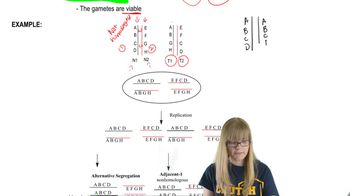
A reciprocal balanced translocation occurs when segments from two different chromosomes are exchanged without any loss of genetic material. While the overall amount of genetic material remains the same, this rearrangement can disrupt gene regulation and lead to abnormal gene expression, potentially resulting in phenotypic changes.
Recommended video:
Guided course
12:42
Reciprocal Translocation

Phenotypic Consequences

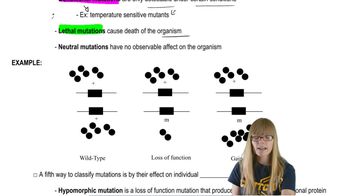
Phenotypic consequences refer to observable traits or characteristics that result from genetic changes. These can include physical attributes, behaviors, or susceptibility to diseases. In the context of chromosome changes, such as translocations, the alteration in gene expression can lead to new phenotypes, which may be beneficial, neutral, or harmful.
Recommended video:
Guided course
10:48
Mutations and Phenotypes