Pearson+ LogoPearson+ Logo
Ch. 15 - Recombinant DNA Technology and Its Applications
Sanders - Genetic Analysis: An Integrated Approach 3rd Edition
Sanders3rd EditionGenetic Analysis: An Integrated ApproachISBN: 9780135564172Not the one you use?Change textbook
Chapter 15, Problem 9

Chimeric gene-fusion products can be used for medical or industrial purposes. One idea is to produce biological therapeutics for human medical use in animals from which the products can be easily harvested—in the milk of sheep or cattle, for example. Outline how you would produce human insulin in the milk of sheep.

Verified step by step guidance
1
Identify the human insulin gene sequence that needs to be expressed in sheep.
Design a suitable vector that includes the human insulin gene and regulatory elements necessary for expression in sheep mammary glands.
Introduce the vector into sheep cells, typically using a method like microinjection into fertilized sheep eggs.
Implant the genetically modified embryos into surrogate sheep mothers to develop into transgenic sheep.
Once the transgenic sheep mature, collect and analyze the milk to confirm the presence and proper folding of human insulin.

Verified video answer for a similar problem:

This video solution was recommended by our tutors as helpful for the problem above.
Video duration:
2m
Was this helpful?

Key Concepts

Here are the essential concepts you must grasp in order to answer the question correctly.

Gene Cloning

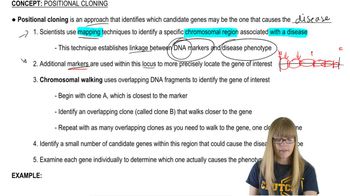
Gene cloning is a molecular biology technique used to create copies of a specific gene. This process involves isolating the gene of interest, such as the human insulin gene, and inserting it into a vector, typically a plasmid. The vector is then introduced into a host organism, allowing it to express the gene and produce the desired protein.
Recommended video:
Guided course
07:
Positional Cloning

Transgenic Animals

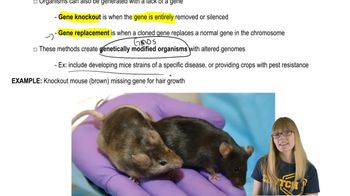
Transgenic animals are genetically modified organisms that have had a foreign gene inserted into their genome. In the context of producing human insulin in sheep, the sheep would be engineered to carry the human insulin gene, enabling them to synthesize insulin in their milk. This approach leverages the natural lactation process to harvest the therapeutic protein efficiently.
Recommended video:
Guided course
09:12
Transgenic Organisms and Gene Therapy

Protein Harvesting and Purification

Protein harvesting and purification involve extracting and refining proteins from biological sources for therapeutic use. After the transgenic sheep produce milk containing human insulin, the insulin must be separated from the milk and purified to ensure it is safe and effective for human use. This process typically includes techniques such as centrifugation, filtration, and chromatography.
Recommended video: