Pearson+ LogoPearson+ Logo
Ch. 15 - Recombinant DNA Technology and Its Applications
Sanders - Genetic Analysis: An Integrated Approach 3rd Edition
Sanders3rd EditionGenetic Analysis: An Integrated ApproachISBN: 9780135564172Not the one you use?Change textbook
Chapter 15, Problem 7b

Using animal models of human diseases can lead to insights into the cellular and genetic bases of the diseases. Duchenne muscular dystrophy (DMD) is the consequence of an X-linked recessive allele.
How would you make a Drosophila model of DMD?

Verified step by step guidance
1
Understand the genetic basis of Duchenne muscular dystrophy (DMD): DMD is caused by mutations in the dystrophin gene, which is located on the X chromosome. This gene encodes a protein essential for muscle function. Since Drosophila does not naturally have a dystrophin gene, you would need to introduce a homologous gene or a human dystrophin gene into the Drosophila genome.
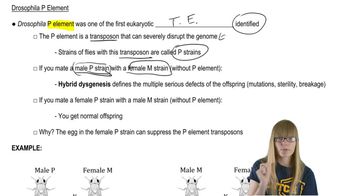
Identify the method for genetic manipulation: Use techniques such as transgenesis to introduce the human dystrophin gene or a mutated version of it into the Drosophila genome. This can be achieved using tools like P-element-mediated transformation or CRISPR/Cas9 gene editing.
Determine the mutation to model DMD: Introduce a specific mutation into the dystrophin gene that mimics the mutation found in human DMD patients. For example, you could create a frameshift mutation or a nonsense mutation that leads to a nonfunctional dystrophin protein.
Select the appropriate genetic background: Since DMD is X-linked recessive, ensure that the mutation is introduced on the X chromosome of Drosophila. Male flies (XY) carrying the mutation will exhibit the disease phenotype, while heterozygous females (XX) will be carriers.
Validate the model: Assess the phenotypic effects of the mutation in Drosophila, such as muscle degeneration or reduced mobility, to confirm that the model accurately reflects the symptoms of DMD. Perform molecular and cellular analyses to study the effects of the mutation on muscle structure and function.

Verified video answer for a similar problem:

This video solution was recommended by our tutors as helpful for the problem above.
Video duration:
1m
Was this helpful?

Key Concepts

Here are the essential concepts you must grasp in order to answer the question correctly.

X-linked Recessive Inheritance

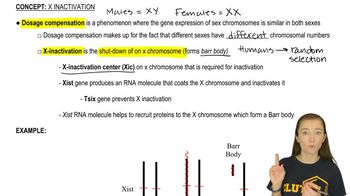
X-linked recessive inheritance refers to a pattern where a gene causing a trait or disorder is located on the X chromosome. Males, having only one X chromosome, are more likely to express the trait if they inherit the recessive allele, while females, with two X chromosomes, may be carriers without showing symptoms. Understanding this inheritance pattern is crucial for modeling diseases like Duchenne muscular dystrophy (DMD) in organisms such as Drosophila.
Recommended video:
Guided course
09:30
X-Inactivation

Drosophila as a Model Organism

Drosophila melanogaster, commonly known as the fruit fly, is widely used in genetic research due to its short life cycle, simple genetics, and well-mapped genome. Researchers can manipulate its genes to study the effects of mutations and understand disease mechanisms. Creating a Drosophila model for DMD involves introducing mutations analogous to those found in humans, allowing for the exploration of disease pathways and potential treatments.
Recommended video:
Guided course
03:08
Drosophila P Element

Gene Editing Techniques

Gene editing techniques, such as CRISPR-Cas9, allow scientists to make precise alterations to an organism's DNA. In the context of creating a Drosophila model for DMD, these techniques can be used to introduce specific mutations in the Drosophila genome that mimic the mutations found in the human dystrophin gene. This enables researchers to study the resulting phenotypes and the underlying cellular mechanisms of the disease.
Recommended video:
Guided course
09:09
Mapping Genes