Pearson+ LogoPearson+ Logo
Ch. 17 - Organelle Inheritance and the Evolution of Organelle Genomes
Sanders - Genetic Analysis: An Integrated Approach 3rd Edition
Sanders3rd EditionGenetic Analysis: An Integrated ApproachISBN: 9780135564172Not the one you use?Change textbook
Chapter 17, Problem 27

Mothers will pass on a mitochondrial defect to their offspring. In a type of gene therapy, one approach to circumvent this problem is to have two different maternal contributions, with the nucleus of the female with the defective mitochondria being placed in an enucleated egg derived from a female with normal mitochondria. After fertilization, the resulting offspring would have three parental sources of DNA—with nuclear DNA derived from a mother and a father, and mitochondrial DNA derived from another 'mother.' Recently, children with this genetic makeup have been born, but the elimination of defective mitochondria is not complete, with the amount of defective mitochondria derived from the defective mother ranging from 0 to 9%. Discuss potential complications resulting from such a mixture of genomes.

Verified step by step guidance
1
Understand the concept of mitochondrial inheritance: Mitochondria are inherited maternally, meaning that all mitochondria in an offspring come from the mother. If the mother has defective mitochondria, these defects can be passed on to her offspring.
Explain the gene therapy approach: In this scenario, the nucleus from the egg of a mother with defective mitochondria is transferred into an enucleated egg (an egg with its nucleus removed) from a donor with normal mitochondria. This creates an egg with nuclear DNA from the original mother, mitochondrial DNA from the donor, and no nucleus of its own.
Discuss the fertilization process: The modified egg is fertilized with sperm from the father, resulting in an embryo with three sources of DNA—nuclear DNA from the mother and father, and mitochondrial DNA from the donor.
Analyze the potential complications: Even though the majority of mitochondria in the resulting embryo come from the donor, a small percentage (0-9%) of defective mitochondria from the original mother may still be present. This mixture of normal and defective mitochondria is called heteroplasmy, and it can lead to variability in the severity of mitochondrial diseases depending on the proportion of defective mitochondria in different tissues.
Consider long-term implications: Over time, the proportion of defective mitochondria may shift due to random segregation during cell division. This could lead to uneven distribution of defective mitochondria in different tissues, potentially causing health issues in the offspring. Additionally, ethical and societal concerns may arise regarding the use of three-parent genetic techniques.

Verified video answer for a similar problem:

This video solution was recommended by our tutors as helpful for the problem above.
Video duration:
1m
Was this helpful?

Key Concepts

Here are the essential concepts you must grasp in order to answer the question correctly.

Mitochondrial Inheritance

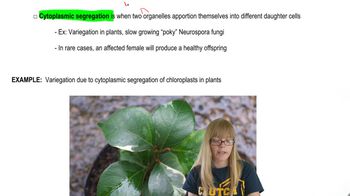
Mitochondrial inheritance refers to the transmission of genetic material located in mitochondria, which is exclusively passed from mothers to their offspring. This type of inheritance is significant because mutations in mitochondrial DNA can lead to various metabolic disorders. Understanding this concept is crucial for analyzing how mitochondrial defects can affect offspring and the implications of using donor mitochondria in gene therapy.
Recommended video:
Guided course
05:13
Organelle Inheritance

Nuclear and Mitochondrial DNA

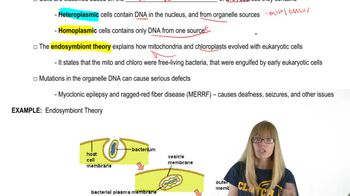
Nuclear DNA is the genetic material found in the nucleus of a cell, inherited from both parents, while mitochondrial DNA is located in the mitochondria and is inherited solely from the mother. The distinction between these two types of DNA is essential for understanding the complexities of genetic contributions in offspring, especially in cases where mitochondrial DNA is sourced from a different maternal donor to prevent defects.
Recommended video:
Guided course
04:11
Organelle DNA Characteristics

Gene Therapy and Ethical Considerations

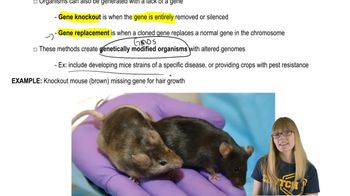
Gene therapy involves altering the genes inside an individual's cells to treat or prevent disease. In the context of mitochondrial replacement therapy, ethical considerations arise regarding the implications of creating embryos with genetic contributions from three parents. Potential complications include unforeseen health issues in offspring, the long-term effects of mixed genomes, and the moral implications of manipulating human genetics.
Recommended video:
Guided course
09:12
Transgenic Organisms and Gene Therapy