Pearson+ LogoPearson+ Logo
Ch. 17 - Organelle Inheritance and the Evolution of Organelle Genomes
Sanders - Genetic Analysis: An Integrated Approach 3rd Edition
Sanders3rd EditionGenetic Analysis: An Integrated ApproachISBN: 9780135564172Not the one you use?Change textbook
Chapter 17, Problem 24

Considering the phylogenetic assignment of Plasmodium falciparum, the malarial parasite, to the phylum Apicomplexa, what might you speculate as to whether the parasite is susceptible to aminoglycoside antibiotics?

Verified step by step guidance
1
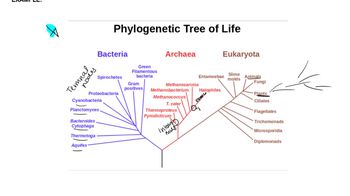
Understand the classification of Plasmodium falciparum: It belongs to the phylum Apicomplexa, which consists of eukaryotic organisms. Aminoglycoside antibiotics typically target prokaryotic ribosomes, so this classification is important for determining susceptibility.
Recall the mechanism of action of aminoglycoside antibiotics: These antibiotics bind to the 30S subunit of prokaryotic ribosomes, interfering with protein synthesis. Eukaryotic organisms, like Plasmodium falciparum, have 40S ribosomal subunits, which are structurally different.
Consider the evolutionary relationship: Apicomplexans, including Plasmodium falciparum, are more closely related to other eukaryotes than to prokaryotes. This suggests that their ribosomes are unlikely to be targeted by aminoglycosides.
Evaluate any exceptions: Some eukaryotic organisms have prokaryotic-like ribosomes in their organelles (e.g., mitochondria). Check if Plasmodium falciparum has organelles with ribosomes that could be targeted by aminoglycosides.
Conclude based on the evidence: Given the eukaryotic nature of Plasmodium falciparum and the specificity of aminoglycosides for prokaryotic ribosomes, it is unlikely that the parasite is susceptible to these antibiotics. However, further research into its organelles may provide additional insights.

Verified video answer for a similar problem:

This video solution was recommended by our tutors as helpful for the problem above.
Video duration:
2m
Was this helpful?

Key Concepts

Here are the essential concepts you must grasp in order to answer the question correctly.

Phylogenetics

Phylogenetics is the study of evolutionary relationships among biological entities, often represented as a tree-like diagram. It helps in understanding how species are related through common ancestry. In the context of Plasmodium falciparum, its classification within the phylum Apicomplexa provides insights into its evolutionary adaptations and potential vulnerabilities to treatments.
Recommended video:
Guided course
08:16
Phylogenetic Trees

Apicomplexa

Apicomplexa is a phylum of parasitic protists known for their complex life cycles and specialized structures for host invasion. Members of this group, including Plasmodium falciparum, have unique cellular features that differentiate them from other organisms. Understanding the biology of Apicomplexa is crucial for predicting their susceptibility to various antibiotics, including aminoglycosides.

Aminoglycoside Antibiotics

Aminoglycoside antibiotics are a class of drugs that inhibit bacterial protein synthesis by binding to the 30S ribosomal subunit. They are primarily effective against aerobic Gram-negative bacteria and some Gram-positive bacteria. However, their efficacy against eukaryotic parasites like Plasmodium falciparum is limited due to differences in ribosomal structure and function, suggesting that these antibiotics may not be effective in treating malaria.
Recommended video:
Related Practice
Textbook Question

The dodo bird (Raphus cucullatus) lived on the Mauritius Islands until the arrival of European sailors, who quickly hunted the large, placid, flightless bird to extinction. Rapid morphological evolution such as often accompanies island isolation had caused the bird's huge size and obscured its physical resemblance to any near relatives. However, sequencing of mitochondrial DNA from dodo bones reveals that they were pigeons, closely related to the Nicobar pigeon from other islands in the Indian Ocean. Why was mitochondrial DNA suited to the study of this extinct species?

759
views
Textbook Question

Cytoplasmic male sterility (CMS) in plants has been exploited to produce hybrid seeds. Specific CMS alleles in the mitochondrial genome can be suppressed by specific dominant alleles in the nuclear genome, called Restorer of fertility alleles, RF. Consider the following cross:

♀CMS 1Rf 1/Rf1 rf2/rf2 × ♂CMS2rf 1/rf1 Rf2/Rf2

What genotypes and phenotypes do you expect in the F₁? If some of the F₁ plants are male fertile, what genotypes and phenotypes do you expect in the F₂?

456
views
Textbook Question

Wolves and coyotes can interbreed in captivity, and now, because of changes in their habitat distribution, they may have the opportunity to interbreed in the wild. To examine this possibility, mitochondrial DNA from wolf and coyote populations throughout North America—including habitats where the two species both reside—was analyzed, and a phylogenetic tree was constructed from the resulting data. A sequence from a jackal was used as an outgroup, and a sequence from a domestic dog was included, demonstrating wolves as the origin of domestic dogs. What do you conclude about the possibility that interspecific hybridization occurred between wolves and coyotes on the basis of this phylogenetic tree?

444
views
Textbook Question

Elysia chlorotica is a sea slug that acquires chloroplasts by consuming an algal food source, Vaucheria litorea. The ingested chloroplasts are sequestered in the sea slug's digestive epithelium, where they actively photosynthesize for months after ingestion. In the algae, the algal nuclear genome encodes more than 90% but not all of the proteins required for chloroplast metabolism. Thus it is suspected that the sea slug actively maintains ingested chloroplasts, supplying them with photosynthetic proteins encoded in the sea slug genome. How would you determine whether the sea slug has acquired photosynthetic genes by horizontal gene transfer from its algal food source? Discuss the steps required for heritable endosymbiosis to eventuate, and their plausibility.

674
views
Textbook Question

Most large protein complexes in mitochondria and chloroplasts are composed both of proteins encoded in the organelle genome and proteins encoded in the nuclear genome. What complexities does this introduce for gene regulation (i.e., for ensuring that the appropriate relative numbers of the proteins in a complex are produced)?

431
views
Textbook Question

Mothers will pass on a mitochondrial defect to their offspring. In a type of gene therapy, one approach to circumvent this problem is to have two different maternal contributions, with the nucleus of the female with the defective mitochondria being placed in an enucleated egg derived from a female with normal mitochondria. After fertilization, the resulting offspring would have three parental sources of DNA—with nuclear DNA derived from a mother and a father, and mitochondrial DNA derived from another 'mother.' Recently, children with this genetic makeup have been born, but the elimination of defective mitochondria is not complete, with the amount of defective mitochondria derived from the defective mother ranging from 0 to 9%. Discuss potential complications resulting from such a mixture of genomes.

390
views