Pearson+ LogoPearson+ Logo
Ch. 18 - Developmental Genetics
Sanders - Genetic Analysis: An Integrated Approach 3rd Edition
Sanders3rd EditionGenetic Analysis: An Integrated ApproachISBN: 9780135564172Not the one you use?Change textbook
Chapter 18, Problem 21b

The Hoxd9–13 genes are thought to specify digit identity. You wish to examine the effect of loss-of-function alleles in developing limbs. How would you construct a mouse in which the function of Hoxd9–13 is retained during anterior–posterior embryonic patterning but is absent from developing limbs?

Verified step by step guidance
1
Step 1: Understand the role of Hoxd9–13 genes. These genes are involved in specifying digit identity during limb development and anterior-posterior embryonic patterning. Loss-of-function alleles can help determine their specific role in limb development.
Step 2: Use a conditional knockout approach to selectively remove the function of Hoxd9–13 genes in developing limbs while retaining their function in anterior-posterior embryonic patterning. This requires the use of Cre-Lox recombination technology.
Step 3: Design a mouse model with a floxed Hoxd9–13 allele. This involves flanking the Hoxd9–13 gene with LoxP sites, which allows the gene to be excised in the presence of Cre recombinase.
Step 4: Select a limb-specific Cre driver. For example, use a promoter that is active only in developing limb tissues, such as the Prx1 promoter, to drive Cre expression specifically in the limbs.
Step 5: Cross the floxed Hoxd9–13 mouse with the limb-specific Cre mouse. The offspring will have Hoxd9–13 function retained in anterior-posterior embryonic patterning but will lose its function in developing limbs due to Cre-mediated excision of the floxed allele.

Verified video answer for a similar problem:

This video solution was recommended by our tutors as helpful for the problem above.
Video duration:
4m
Was this helpful?

Key Concepts

Here are the essential concepts you must grasp in order to answer the question correctly.

Hox Genes

Hox genes are a group of related genes that determine the body plan and the identity of body segments in animals. They play a crucial role in embryonic development by regulating the expression of other genes that control the formation of limbs and other structures. In particular, the Hoxd9–13 genes are involved in specifying digit identity, influencing how limbs develop and what types of digits are formed.
Recommended video:
Guided course
02:34
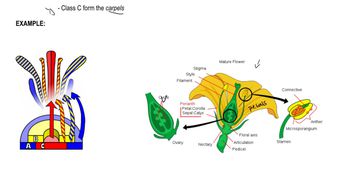
Plant HOX genes

Loss-of-Function Alleles

Loss-of-function alleles are mutations that result in the reduced or abolished function of a gene. In the context of Hoxd9–13, creating loss-of-function alleles would help researchers understand the specific roles these genes play in limb development. By analyzing the phenotypic consequences of these mutations, scientists can infer how the absence of Hoxd9–13 affects digit identity and limb morphology.
Recommended video:
Guided course
08:26
Functional Genomics

Conditional Gene Knockout

A conditional gene knockout is a genetic engineering technique that allows for the selective inactivation of a gene in specific tissues or at specific developmental stages. This approach is particularly useful for studying essential genes like Hoxd9–13, as it enables researchers to retain gene function in other areas (like anterior-posterior patterning) while eliminating it in developing limbs. Techniques such as Cre-loxP recombination are commonly used to achieve this targeted gene disruption.
Recommended video:
Guided course
09:09
Mapping Genes
Related Practice
Textbook Question

A powerful approach to identifying genes of a developmental pathway is to screen for mutations that suppress or enhance the phenotype of interest. This approach was undertaken to elucidate the genetic pathway controlling C. elegans vulval development. A lin-3 loss-of-function mutant with a vulva-less phenotype was mutagenized. Based on your knowledge of the genetic pathway, what types of mutations will suppress the vulva-less phenotype?

580
views
Textbook Question

A powerful approach to identifying genes of a developmental pathway is to screen for mutations that suppress or enhance the phenotype of interest. This approach was undertaken to elucidate the genetic pathway controlling C. elegans vulval development. In a complementary experiment, a gain-of-function let-23 mutant with a multi-vulva phenotype was also mutagenized. What types of mutations will suppress the multi-vulva phenotype?

560
views
Textbook Question

The Hoxd9–13 genes are thought to specify digit identity. What would be the consequence of ectopically expressing Hoxd10 throughout the developing mouse limb bud? What about Hoxd11? What about both Hoxd10 and Hoxd11?

685
views
Textbook Question

Three-spined stickleback fish live in lakes formed when the last ice age ended 10,000 to 15,000 years ago. In lakes where the sticklebacks are prey for larger fish, they develop 35 bony plates along their body as armor. In contrast, sticklebacks in lakes where there are no predators develop only a few or no bony plates. In crosses between fish of the two different morphologies, the lack of bony armor segregates as a recessive trait that maps to the ectodermal dysplasin (Eda) gene. Comparisons between the Eda-coding regions of the armored and nonarmored fish revealed no differences. How can you explain this result?

444
views
Textbook Question

Three-spined stickleback fish live in lakes formed when the last ice age ended 10,000 to 15,000 years ago. In lakes where the sticklebacks are prey for larger fish, they develop 35 bony plates along their body as armor. In contrast, sticklebacks in lakes where there are no predators develop only a few or no bony plates. Loss-of-function mutations in the coding region of the homologous gene in humans result in loss of hair, teeth, and sweat glands, as in the toothless men of Sind (India). What does this suggest about hair, teeth, and sweat glands in humans?

561
views
Textbook Question

The flowering jungle plant Lacandonia schismatica, discovered in southern Mexico, has a unique floral structure. Petal-like organs are in the outer whorls surrounding a number of carpels, and stamens are in the center of the flower. Closely related species are dioecious; female plants bear flowers that resemble those of Lacandonia, but without the central stamens. What type of mutation could have resulted in the evolution of Lacandonia flowers?

408
views