Pearson+ LogoPearson+ Logo
Ch. 20 - Population Genetics and Evolution at the Population, Species, and Molecular Levels
Sanders - Genetic Analysis: An Integrated Approach 3rd Edition
Sanders3rd EditionGenetic Analysis: An Integrated ApproachISBN: 9780135564172Not the one you use?Change textbook
Chapter 20, Problem D.14

The mtDNA sequence of Neanderthals is more similar to that of modern humans than to that of Denisovans. However, analyses of nuclear DNA clearly indicate that Neandertals and Denisovans share a more recent common ancestor than either of these hominins shares with modern humans. Propose a hypothesis to resolve the discrepancy between the mtDNA and the nuclear genome.

Verified step by step guidance
1
Step 1: Understand the difference between mitochondrial DNA (mtDNA) and nuclear DNA. mtDNA is inherited maternally and does not recombine, while nuclear DNA is inherited from both parents and undergoes recombination, providing a broader picture of ancestry.
Step 2: Recognize that the discrepancy arises because mtDNA shows Neandertals closer to modern humans, whereas nuclear DNA shows Neandertals and Denisovans as more closely related. This suggests different evolutionary histories for mtDNA and nuclear DNA.
Step 3: Consider the possibility of introgression or gene flow events. For example, mtDNA from modern humans could have replaced the original Neandertal mtDNA through interbreeding, leading to Neandertals having mtDNA more similar to modern humans despite their nuclear DNA reflecting a closer relationship to Denisovans.
Step 4: Formulate a hypothesis that explains this pattern, such as a scenario where Neandertals acquired modern human mtDNA via hybridization, while their nuclear genome retained the ancestral relationship with Denisovans.
Step 5: Suggest further analyses to test this hypothesis, such as examining the timing and extent of gene flow events, and comparing additional genetic markers to see if similar patterns exist.

Verified video answer for a similar problem:

This video solution was recommended by our tutors as helpful for the problem above.
Video duration:
6m
Was this helpful?

Key Concepts

Here are the essential concepts you must grasp in order to answer the question correctly.

Mitochondrial DNA (mtDNA) Inheritance

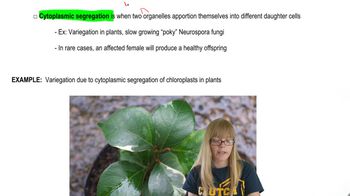
mtDNA is inherited maternally and does not recombine, making it a useful tool for tracing maternal lineages. Because it represents only the maternal ancestry, mtDNA can show different evolutionary relationships compared to nuclear DNA, which is inherited from both parents.
Recommended video:
Guided course
05:13
Organelle Inheritance

Nuclear DNA and Phylogenetic Relationships

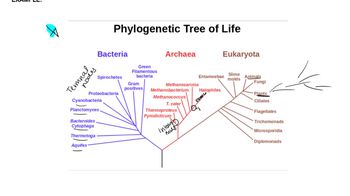
Nuclear DNA contains the majority of genetic information and is inherited from both parents, reflecting the combined ancestry of an organism. Analyses of nuclear DNA provide a more comprehensive view of evolutionary relationships and can reveal recent common ancestors that mtDNA alone might not detect.
Recommended video:
Guided course
08:16
Phylogenetic Trees

Introgression and Gene Flow Between Hominin Groups

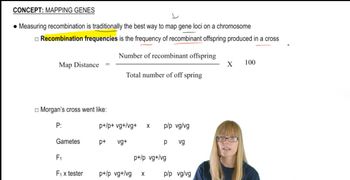
Introgression refers to the transfer of genetic material between species or populations through hybridization and backcrossing. Gene flow between Neandertals, Denisovans, and modern humans can cause discrepancies between mtDNA and nuclear DNA phylogenies, as mtDNA may reflect past hybridization events or replacement of mitochondrial lineages.
Recommended video:
Guided course
09:09
Mapping Genes
Related Practice
Textbook Question

Denisovans are known from bones found in Denisova Cave in the Altai Mountains in Siberia, but traces of their DNA are found in Australians and Melanesians, whose ancestors likely migrated across Asia much farther to the south. How can these geographic differences be reconciled?

444
views
Textbook Question

In Island Melanesia and Polynesia, most mtDNA haplotypes are of Asian ancestry, whereas Y chromosome haplotypes are predominantly New Guinean. Provide a hypothesis for this sex-biased distribution.

449
views
Textbook Question

When the human genome is examined, the chromosomes appear to have undergone only minimal rearrangement in the 100 million years since the last common ancestor of eutherian mammals. However, when individual humans are examined or when the human genome is compared with that of chimpanzees, a large number of small indels and SNPs can be detected. How are these observations reconciled?

535
views
Textbook Question

A 9-bp deletion in the mitochondrial genome between the gene for cytochrome oxidase subunit II and the gene for tRNAᴸʸˢ is a common polymorphism among Polynesians and also in a population of Taiwanese natives. The frequency of the polymorphism varies between populations: The highest frequency is seen in the Maoris of New Zealand (98%), lower levels are seen in eastern Polynesia (80%) and western Polynesia (89%), and the lowest level is seen in the Taiwanese population. What do these frequencies tell us about the settlement of the Pacific by the ancestors of the present-day Polynesians?

435
views
Textbook Question

If you were to compare your genome sequence with that of your parents, how would it differ? If you were to compare your genome sequence with another student's in the class, how would it differ? What additional difference might you see if your genome was compared with that of a sub-Saharan African, or if you are of sub-Saharan African descent, with that of a non-African?

498
views
Textbook Question

Compare and contrast the terms in each of the following pairs:

Population and gene pool

541
views