Pearson+ LogoPearson+ Logo
Ch.11 Nucleic Acids Big Molecules with a Big Role
Frost - General, Organic and Biological Chemistry 4th Edition
Frost4th EditionGeneral, Organic and Biological ChemistryISBN: 9780134988696Not the one you use?Change textbook
Chapter 7, Problem 61

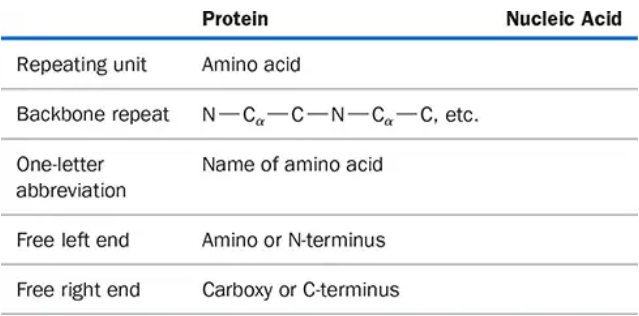
Fill in the following table comparing structural similarities between proteins and nucleic acids:

Verified step by step guidance
1
Step 1: Begin by identifying the structural components of proteins and nucleic acids. Proteins are composed of amino acids linked by peptide bonds, while nucleic acids are composed of nucleotides linked by phosphodiester bonds.
Step 2: Compare the monomer units. Proteins have amino acids as their monomers, whereas nucleic acids have nucleotides (which consist of a sugar, phosphate group, and nitrogenous base).
Step 3: Examine the types of bonds that connect the monomers. Proteins use peptide bonds formed through dehydration synthesis, while nucleic acids use phosphodiester bonds formed between the phosphate group of one nucleotide and the sugar of another.
Step 4: Analyze the three-dimensional structure. Proteins fold into specific shapes (primary, secondary, tertiary, and quaternary structures) based on interactions between amino acid side chains. Nucleic acids, such as DNA, form double helixes due to hydrogen bonding between complementary bases.
Step 5: Consider the functional roles. Proteins serve as enzymes, structural components, and signaling molecules, while nucleic acids store and transmit genetic information (DNA and RNA).

Verified video answer for a similar problem:

This video solution was recommended by our tutors as helpful for the problem above.
Video duration:
2m
Was this helpful?

Key Concepts

Here are the essential concepts you must grasp in order to answer the question correctly.

Protein Structure

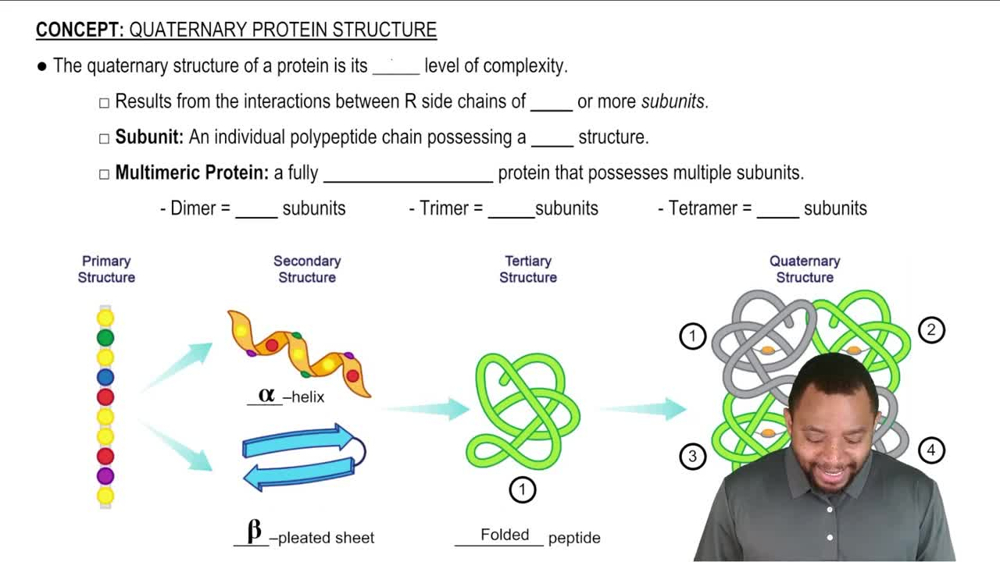
Proteins are composed of amino acids linked by peptide bonds, forming polypeptide chains that fold into specific three-dimensional shapes. The structure of proteins is categorized into four levels: primary (sequence of amino acids), secondary (local folding patterns like alpha helices and beta sheets), tertiary (overall 3D shape), and quaternary (assembly of multiple polypeptide chains). Understanding these structural levels is crucial for comparing proteins with nucleic acids.
Recommended video:
Guided course
3:26
Quaternary Protein Structure Concept 1

Nucleic Acid Structure

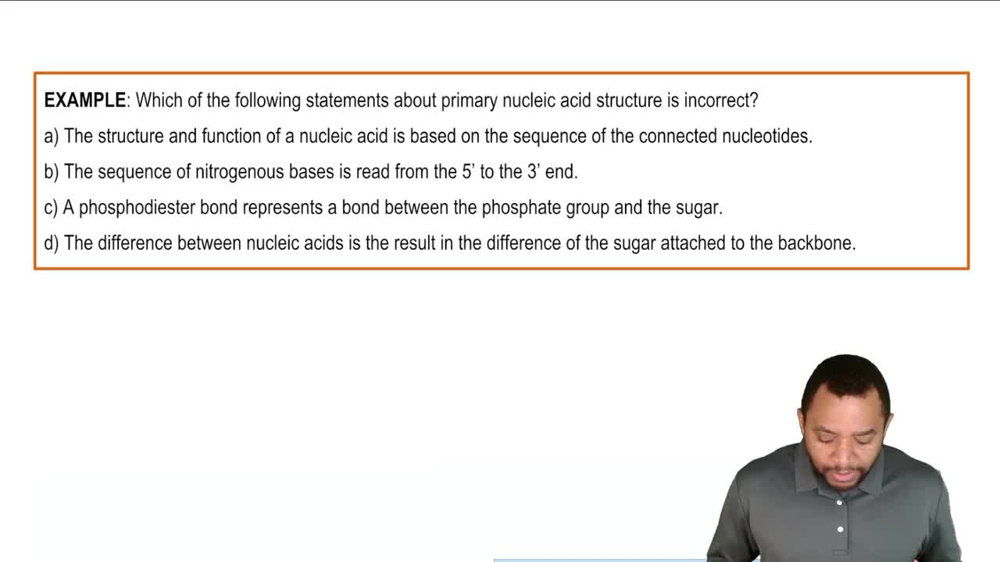
Nucleic acids, such as DNA and RNA, are polymers made up of nucleotide monomers, which consist of a sugar, a phosphate group, and a nitrogenous base. The structure of nucleic acids is typically described in terms of their primary sequence (the order of nucleotides), secondary structure (like the double helix in DNA), and tertiary structure (the overall 3D arrangement). This structural understanding is essential for comparing them to proteins.
Recommended video:
Guided course
0:56
Primary Structure of Nucleic Acids Example 2

Comparative Biochemistry

Comparative biochemistry involves analyzing the similarities and differences in the structure and function of biomolecules, such as proteins and nucleic acids. This field helps elucidate how these macromolecules interact within biological systems and their roles in processes like genetic information storage and enzymatic activity. Recognizing these comparisons is vital for understanding the broader context of molecular biology.
Recommended video:
Guided course
00:36
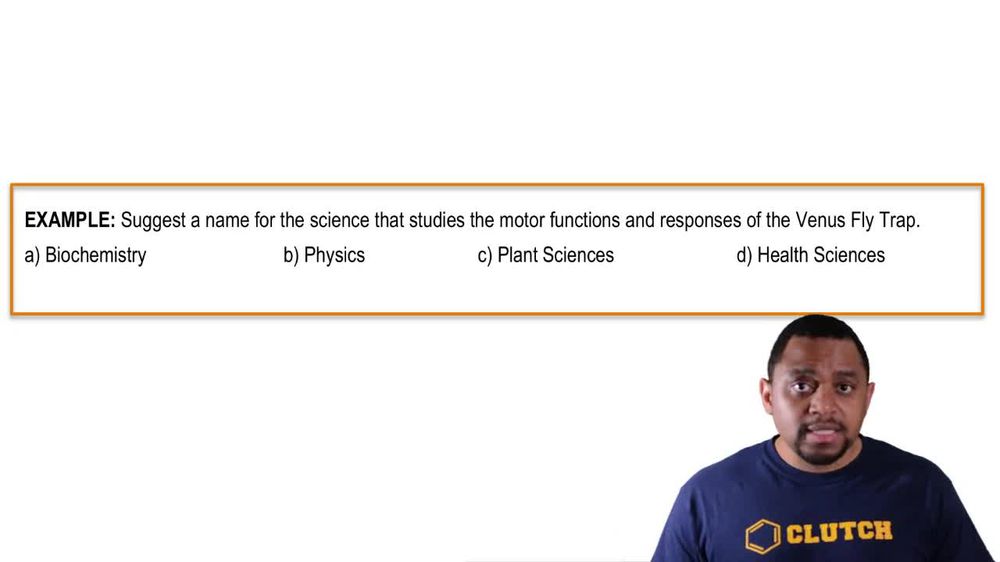
What is Chemistry? Example 1