Pearson+ LogoPearson+ Logo
Ch.11 Nuclear Chemistry
McMurry - Fundamentals of GOB 8th Edition
McMurry8th EditionFundamentals of GOBISBN: 9780134015187Not the one you use?Change textbook
Chapter 11, Problem 34

How does ionizing radiation lead to cell damage?

Verified step by step guidance
1
Ionizing radiation has enough energy to remove tightly bound electrons from atoms, creating ions. This process is called ionization.
When ionizing radiation interacts with biological molecules, such as DNA, it can break chemical bonds, leading to structural damage in the molecules.
The damage to DNA can result in mutations, which may disrupt normal cellular processes or lead to uncontrolled cell growth (cancer).
Ionizing radiation can also generate reactive oxygen species (ROS) by interacting with water molecules in the cell. These ROS are highly reactive and can further damage cellular components like proteins, lipids, and DNA.
The accumulation of such damage can impair cell function, trigger cell death, or lead to long-term effects such as carcinogenesis if the damage is not properly repaired by the cell's repair mechanisms.

Verified video answer for a similar problem:

This video solution was recommended by our tutors as helpful for the problem above.
Video duration:
1m
Was this helpful?

Key Concepts

Here are the essential concepts you must grasp in order to answer the question correctly.

Ionizing Radiation

Ionizing radiation refers to high-energy particles or electromagnetic waves that have enough energy to remove tightly bound electrons from atoms, creating ions. This type of radiation includes alpha particles, beta particles, gamma rays, and X-rays. When these particles interact with biological tissues, they can cause direct damage to cellular structures, including DNA.
Recommended video:
Guided course
02:22
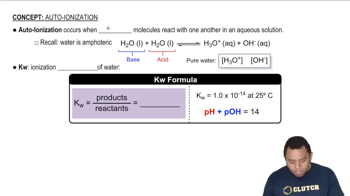
Auto-Ionization and Kw

DNA Damage

DNA damage occurs when the structure of DNA is altered, which can lead to mutations, cell death, or cancer. Ionizing radiation can cause various types of DNA damage, such as single-strand breaks, double-strand breaks, and base modifications. The severity of the damage often depends on the radiation dose and the type of cells affected.
Recommended video:
Guided course
5:08
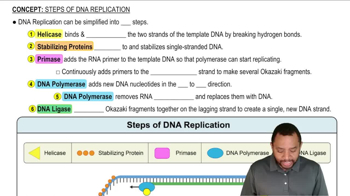
Steps of DNA Replication Concept 1

Cellular Repair Mechanisms

Cells have intrinsic repair mechanisms to fix DNA damage, including base excision repair, nucleotide excision repair, and homologous recombination. However, if the damage is too extensive or the repair mechanisms fail, it can result in cell cycle arrest, apoptosis (programmed cell death), or carcinogenesis. Understanding these mechanisms is crucial for assessing the biological effects of ionizing radiation.
Recommended video:
Guided course
2:54
Intro to Lipid Digestion Concept 1