Pearson+ LogoPearson+ Logo
Ch.13 Alkenes, Alkynes, and Aromatic Compounds
McMurry - Fundamentals of GOB 8th Edition
McMurry8th EditionFundamentals of GOBISBN: 9780134015187Not the one you use?Change textbook
Chapter 13, Problem 34d

Write structural formulas for compounds that meet the following descriptions:
d. A disubstituted benzene with a total of 8 carbons (three possibilities)

Verified step by step guidance
1
Identify the base structure: A benzene ring, which consists of 6 carbon atoms arranged in a hexagonal ring with alternating double bonds.
Determine the number of substituents: Since the compound is disubstituted, there will be two substituents attached to the benzene ring.
Calculate the number of carbon atoms in the substituents: The benzene ring has 6 carbons, so the substituents must contribute a total of 2 additional carbons to reach 8 carbons in total.
Consider possible substituents: The substituents could be alkyl groups such as methyl (CH3) or ethyl (C2H5).
Draw the structural formulas: For each possibility, attach the substituents to the benzene ring in different positions (ortho, meta, or para) and ensure the total number of carbons is 8.

Verified video answer for a similar problem:

This video solution was recommended by our tutors as helpful for the problem above.
Was this helpful?

Key Concepts

Here are the essential concepts you must grasp in order to answer the question correctly.

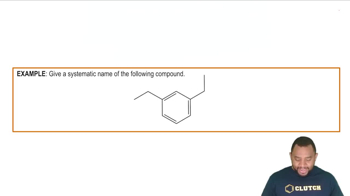
Disubstituted Benzene

Disubstituted benzene refers to a benzene ring that has two substituents attached to it. The positions of these substituents can vary, leading to different isomers. Understanding the nomenclature and the implications of substituent positions is crucial for drawing accurate structural formulas.
Recommended video:
Guided course
1:08
Disubstituted Benzene Example 2

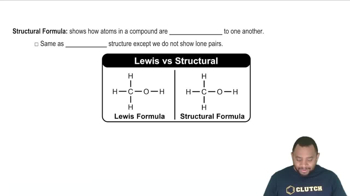
Structural Formula

A structural formula represents the arrangement of atoms within a molecule, showing how they are bonded together. It provides insight into the molecular structure, including the connectivity of atoms and the presence of functional groups. For disubstituted benzenes, it is important to depict the correct positions of the substituents on the benzene ring.
Recommended video:
Guided course
1:01
Structural Formula Concept 2

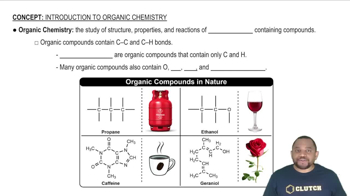
Carbon Count in Organic Compounds

The total number of carbon atoms in a compound is essential for determining its molecular formula and structure. In this case, the requirement of 8 carbons means that the disubstituted benzene must be combined with additional carbon atoms, possibly in the form of alkyl groups. This understanding helps in constructing the correct structural formulas that meet the specified criteria.
Recommended video:
Guided course
2:26
Introduction to Organic Chemistry Concept 1