Pearson+ LogoPearson+ Logo
Ch.14 Some Compounds with Oxygen, Sulfur, or a Halogen
McMurry - Fundamentals of GOB 8th Edition
McMurry8th EditionFundamentals of GOBISBN: 9780134015187Not the one you use?Change textbook
Chapter 14, Problem 49

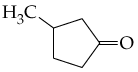
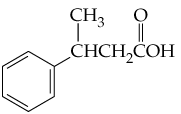
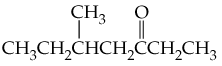
What alcohols would you oxidize to obtain the following carbonyl compounds?
a.
b.
c.

Verified step by step guidance
1
Step 1: Understand the oxidation process of alcohols. Primary alcohols oxidize to form aldehydes, and with further oxidation, they can form carboxylic acids. Secondary alcohols oxidize to form ketones. Tertiary alcohols generally do not undergo oxidation under normal conditions.
Step 2: Analyze the given carbonyl compounds in the problem. Determine whether each compound is an aldehyde or a ketone based on its structure. Aldehydes have a carbonyl group (C=O) bonded to at least one hydrogen atom, while ketones have the carbonyl group bonded to two carbon atoms.
Step 3: For each carbonyl compound, identify the corresponding alcohol that would oxidize to produce it. If the compound is an aldehyde, the precursor is a primary alcohol. If it is a ketone, the precursor is a secondary alcohol.
Step 4: Write the structural formula of the alcohols that correspond to each carbonyl compound. Ensure that the oxidation process aligns with the functional group transformation (e.g., -OH to C=O).
Step 5: Verify your answers by considering the oxidation reaction mechanism and ensuring that the proposed alcohols can feasibly oxidize to form the given carbonyl compounds.

Verified video answer for a similar problem:

This video solution was recommended by our tutors as helpful for the problem above.
Was this helpful?

Key Concepts

Here are the essential concepts you must grasp in order to answer the question correctly.

Oxidation of Alcohols

Oxidation of alcohols involves the conversion of alcohols into carbonyl compounds, such as aldehydes and ketones, through the removal of hydrogen atoms. Primary alcohols typically oxidize to aldehydes, while secondary alcohols oxidize to ketones. The process can be facilitated by various oxidizing agents, such as potassium dichromate or PCC (pyridinium chlorochromate).
Recommended video:
Guided course
1:49
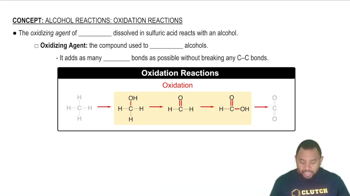
Alcohol Reactions: Oxidation Concept 1

Types of Alcohols

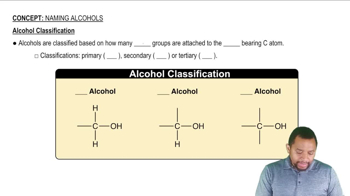
Alcohols are classified into three categories: primary, secondary, and tertiary. Primary alcohols have the hydroxyl group (-OH) attached to a carbon that is connected to only one other carbon, secondary alcohols are attached to two, and tertiary alcohols to three. This classification is crucial because it determines the product of oxidation; for instance, tertiary alcohols do not oxidize to carbonyl compounds under typical conditions.
Recommended video:
Guided course
1:10
Alcohol Classification Concept 2

Carbonyl Compounds

Carbonyl compounds are organic molecules that contain a carbon atom double-bonded to an oxygen atom (C=O). They include aldehydes and ketones, which differ in the placement of the carbonyl group; aldehydes have it at the end of the carbon chain, while ketones have it within the chain. Understanding the structure and reactivity of these compounds is essential for predicting the outcomes of oxidation reactions involving alcohols.
Recommended video:
Guided course
1:09
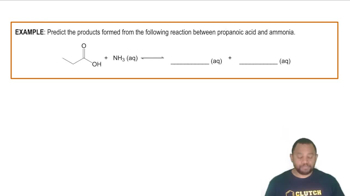
Carboxylic Acid Reactions Example 1