Pearson+ LogoPearson+ Logo
Ch.17 Carboxylic Acids and Their Derivatives
McMurry - Fundamentals of GOB 8th Edition
McMurry8th EditionFundamentals of GOBISBN: 9780134015187Not the one you use?Change textbook
Chapter 17, Problem 44a

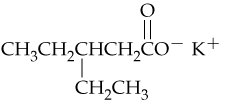
Give systematic names for the following carboxylic acid salts:
a.

Verified step by step guidance
1
Identify the parent carboxylic acid by locating the carboxylate group (COO⁻) in the structure. The parent name is derived from the longest carbon chain containing the carboxylate group.
Determine the cation associated with the carboxylate group (e.g., sodium, potassium, ammonium, etc.). This will be the first part of the name.
Replace the '-ic acid' suffix of the parent carboxylic acid name with '-ate' to indicate the salt form. For example, 'acetic acid' becomes 'acetate.'
Combine the cation name and the modified carboxylate name to form the systematic name of the salt. For example, if the cation is sodium and the carboxylate is acetate, the name would be 'sodium acetate.'
If there are substituents on the carbon chain, identify their positions and names, and include them in the systematic name following IUPAC nomenclature rules. Number the chain starting from the carbon of the carboxylate group.

Verified video answer for a similar problem:

This video solution was recommended by our tutors as helpful for the problem above.
Was this helpful?

Key Concepts

Here are the essential concepts you must grasp in order to answer the question correctly.

Carboxylic Acids

Carboxylic acids are organic compounds characterized by the presence of a carboxyl group (-COOH). They are known for their acidic properties and are commonly found in various biological and chemical processes. Understanding the structure and naming conventions of carboxylic acids is essential for identifying their salts.
Recommended video:
Guided course
1:09
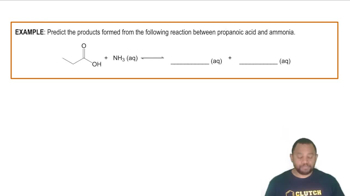
Carboxylic Acid Reactions Example 1

Salts of Carboxylic Acids

Salts of carboxylic acids are formed when the hydrogen of the carboxyl group is replaced by a metal or ammonium ion. These salts retain the properties of the parent acid but are typically more stable and less volatile. The systematic naming of these salts involves identifying the cation and the anion derived from the carboxylic acid.
Recommended video:
Guided course
1:09
Carboxylic Acid Reactions Example 1

IUPAC Nomenclature

IUPAC nomenclature is a systematic method for naming chemical compounds, ensuring that each name conveys specific information about the structure and composition of the compound. For carboxylic acid salts, the name typically includes the name of the cation followed by the name of the carboxylate anion, which is derived from the corresponding carboxylic acid.
Recommended video:
Guided course
3:18
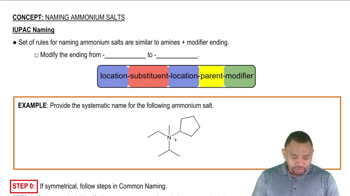
IUPAC Naming Concept 3