Pearson+ LogoPearson+ Logo
Ch.18 Amino Acids and Proteins
McMurry - Fundamentals of GOB 8th Edition
McMurry8th EditionFundamentals of GOBISBN: 9780134015187Not the one you use?Change textbook
Chapter 18, Problem 38a

Cell membranes are studded with proteins. Some of these proteins, involved in the transport of molecules across the membrane into the cell, span the entire membrane and are called transmembrane proteins. The interior of the cell membrane is hydrophobic and nonpolar, whereas both the extracellular and intracellular fluids are water-based.
a. List three amino acids you would expect to find in the part of a transmembrane protein that lies within the cell membrane.

Verified step by step guidance
1
Understand the structure of the cell membrane: The cell membrane is composed of a phospholipid bilayer with a hydrophobic (nonpolar) interior and hydrophilic (polar) surfaces. Transmembrane proteins span this bilayer, meaning they have regions that interact with both the hydrophobic interior and the hydrophilic exterior.
Recall the properties of amino acids: Amino acids can be classified based on the polarity and charge of their side chains. Hydrophobic (nonpolar) amino acids are more likely to be found in the hydrophobic interior of the membrane, while hydrophilic (polar or charged) amino acids are more likely to be found on the exterior.
Identify hydrophobic amino acids: Examples of hydrophobic amino acids include leucine, isoleucine, and valine. These amino acids have nonpolar side chains that interact favorably with the hydrophobic interior of the membrane.
Relate the amino acids to the transmembrane protein: In the part of the transmembrane protein that lies within the hydrophobic interior of the cell membrane, you would expect to find amino acids like leucine, isoleucine, and valine because their nonpolar side chains can interact with the nonpolar environment.
Conclude the reasoning: The presence of hydrophobic amino acids in the membrane-spanning region of the protein helps stabilize the protein within the hydrophobic environment of the membrane, ensuring proper function and structure.

Verified video answer for a similar problem:

This video solution was recommended by our tutors as helpful for the problem above.
Was this helpful?

Key Concepts

Here are the essential concepts you must grasp in order to answer the question correctly.

Transmembrane Proteins

Transmembrane proteins are integral membrane proteins that span the entire lipid bilayer of cell membranes. They play crucial roles in transporting molecules across the membrane and facilitating communication between the cell's interior and exterior. Their structure typically includes hydrophobic regions that interact with the lipid bilayer and hydrophilic regions that extend into the aqueous environments on either side of the membrane.
Recommended video:
Guided course
2:01
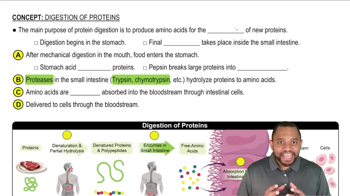
Digestion of Proteins Concept 1

Hydrophobic and Hydrophilic Interactions

Hydrophobic interactions occur between nonpolar molecules that repel water, while hydrophilic interactions involve polar molecules that attract water. In the context of cell membranes, the hydrophobic interior of the lipid bilayer creates a barrier to most water-soluble substances, necessitating the presence of transmembrane proteins to facilitate their transport. Understanding these interactions is essential for predicting which amino acids are likely to be found in different regions of transmembrane proteins.
Recommended video:
Guided course
2:41
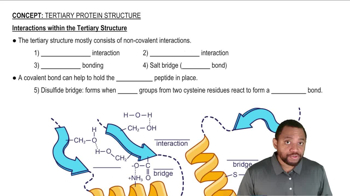
Interactions within the Tertiary Structure Concept 2

Amino Acid Properties

Amino acids have distinct properties based on their side chains (R groups), which can be polar, nonpolar, acidic, or basic. In transmembrane proteins, the amino acids located within the hydrophobic region of the membrane are typically nonpolar, allowing them to interact favorably with the lipid bilayer. Examples of such nonpolar amino acids include leucine, isoleucine, and valine, which help stabilize the protein's structure within the membrane.
Recommended video:
Guided course
3:03
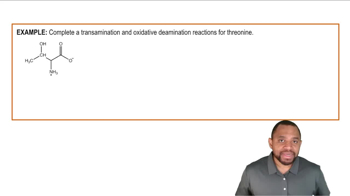
Amino Acid Catabolism: Amino Group Example 2