
Pearson+ LogoPearson+ Logo
Ch.18 Amino Acids and Proteins
McMurry - Fundamentals of GOB 8th Edition
McMurry8th EditionFundamentals of GOBISBN: 9780134015187Not the one you use?Change textbook
Chapter 18, Problem 18a

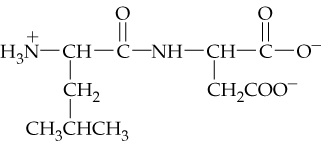
Identify the amino acids in the following dipeptide and tripeptide, and write the abbreviated forms of the peptide names. Copy the dipeptides, draw a box around the peptide bonds, and use an arrow to identify the α-carbon atoms. Draw a circle around the R groups, and indicate if the R groups are neutral, polar, acidic, or basic.
a. Diagram of a dipeptide and tripeptide showing peptide bonds, α-carbons, and R groups with annotations for their properties.

Verified step by step guidance
1
Step 1: Understand the structure of peptides. Peptides are chains of amino acids linked by peptide bonds. A dipeptide consists of two amino acids, while a tripeptide consists of three. Each amino acid has an α-carbon, an amino group (-NH2), a carboxyl group (-COOH), and a unique R group (side chain).
Step 2: Identify the amino acids in the peptide. Look at the structure provided in the image and locate the repeating units of amino acids. Each amino acid can be identified by its R group, which is unique to each amino acid. Use a reference table of amino acids to match the R groups to their corresponding amino acids.
Step 3: Write the abbreviated form of the peptide name. Use the three-letter or one-letter codes for each amino acid in the sequence. For example, glycine is abbreviated as 'Gly' (three-letter) or 'G' (one-letter). Combine the abbreviations in the order the amino acids appear in the peptide.
Step 4: Highlight the peptide bonds. Peptide bonds are formed between the carboxyl group of one amino acid and the amino group of the next. Draw a box around these bonds in the structure provided. These bonds are typically represented as C(=O)-NH.
Step 5: Identify and classify the R groups. Circle the R groups in the structure and determine their properties. Neutral R groups are nonpolar or uncharged polar, acidic R groups contain a carboxylic acid (-COOH), and basic R groups contain an amino group (-NH2 or similar). Use arrows to point to the α-carbon atoms, which are the central carbons bonded to the amino group, carboxyl group, hydrogen, and R group.

Verified video answer for a similar problem:

This video solution was recommended by our tutors as helpful for the problem above.
Was this helpful?

Key Concepts

Here are the essential concepts you must grasp in order to answer the question correctly.

Amino Acids

Amino acids are organic compounds that serve as the building blocks of proteins. Each amino acid consists of a central carbon atom (α-carbon) bonded to an amino group, a carboxyl group, a hydrogen atom, and a variable side chain (R group) that determines its properties. Understanding the structure and classification of amino acids is essential for analyzing peptides.
Recommended video:
Guided course
3:03
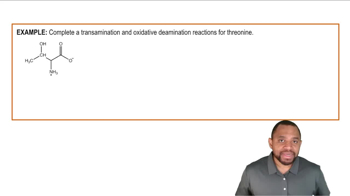
Amino Acid Catabolism: Amino Group Example 2

Peptide Bonds

Peptide bonds are covalent bonds that link amino acids together to form peptides and proteins. They are formed through a dehydration synthesis reaction, where the carboxyl group of one amino acid reacts with the amino group of another, releasing a molecule of water. Identifying and illustrating peptide bonds is crucial for understanding the structure of dipeptides and tripeptides.
Recommended video:
Guided course
1:24
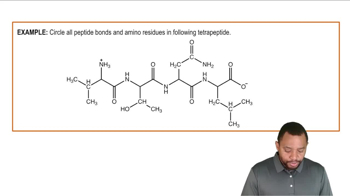
Peptides Example 1

R Groups and Their Properties

The R group, or side chain, of an amino acid determines its chemical properties and classification as neutral, polar, acidic, or basic. These properties influence the behavior of peptides in biological systems, including their solubility and interactions with other molecules. Analyzing the R groups in the context of the dipeptide and tripeptide is vital for understanding their functional roles.
Recommended video:
Guided course
02:11
Chemical Properties Example 1