Pearson+ LogoPearson+ Logo
Ch.21 The Generation of Biochemical Energy
McMurry - Fundamentals of GOB 8th Edition
McMurry8th EditionFundamentals of GOBISBN: 9780134015187Not the one you use?Change textbook
Chapter 21, Problem 51

What is the purpose of the citric acid cycle?

Verified step by step guidance
1
The citric acid cycle, also known as the Krebs cycle or TCA cycle, is a central metabolic pathway in cellular respiration that occurs in the mitochondria of eukaryotic cells.
Its primary purpose is to oxidize acetyl-CoA, derived from carbohydrates, fats, and proteins, into carbon dioxide (CO₂), while capturing high-energy electrons in the form of NADH and FADH₂.
The cycle begins when acetyl-CoA combines with oxaloacetate to form citrate, which undergoes a series of enzymatic reactions to regenerate oxaloacetate, completing the cycle.
During these reactions, energy is harvested in the form of NADH and FADH₂, which are later used in the electron transport chain to produce ATP, the cell's main energy currency.
Additionally, the citric acid cycle provides intermediates for biosynthetic pathways, such as amino acid and nucleotide synthesis, making it a key hub in metabolism.

Verified video answer for a similar problem:

This video solution was recommended by our tutors as helpful for the problem above.
Video duration:
1m
Was this helpful?

Key Concepts

Here are the essential concepts you must grasp in order to answer the question correctly.

Citric Acid Cycle

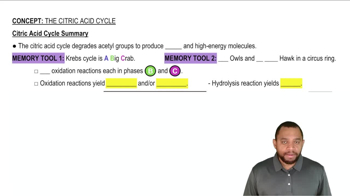
The citric acid cycle, also known as the Krebs cycle or TCA cycle, is a series of chemical reactions used by all aerobic organisms to generate energy. It occurs in the mitochondria and is a key component of cellular respiration, where acetyl-CoA is oxidized to produce ATP, NADH, and FADH2, which are essential for energy production.
Recommended video:
Guided course
2:31
Citric Acid Cycle Summary Concept 12

Energy Production

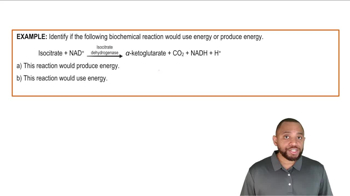
The primary purpose of the citric acid cycle is to produce energy in the form of ATP. This energy is crucial for various cellular processes. The cycle also generates electron carriers, NADH and FADH2, which feed into the electron transport chain, leading to further ATP production through oxidative phosphorylation.
Recommended video:
Guided course
1:08
Energy Production In Biochemical Pathways Example 1

Metabolic Intermediates

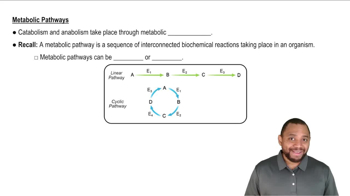
The citric acid cycle produces several metabolic intermediates that are vital for various biosynthetic pathways. These intermediates can be used to synthesize amino acids, nucleotides, and other essential biomolecules, highlighting the cycle's role not only in energy production but also in cellular metabolism and growth.
Recommended video:
Guided course
0:52
Metabolic Pathways Concept 2