Pearson+ LogoPearson+ Logo
Ch.22 Carbohydrate Metabolism
McMurry - Fundamentals of GOB 8th Edition
McMurry8th EditionFundamentals of GOBISBN: 9780134015187Not the one you use?Change textbook
Chapter 22, Problem 39

What is the major purpose of the pentose phosphate pathway? What cofactor (coenzyme) is used?

Verified step by step guidance
1
The major purpose of the pentose phosphate pathway (PPP) is to generate NADPH and ribose-5-phosphate. NADPH is a reducing agent used in biosynthetic reactions (e.g., fatty acid synthesis and cholesterol synthesis) and in maintaining the antioxidant system of the cell. Ribose-5-phosphate is a precursor for nucleotide and nucleic acid synthesis.
The pathway is divided into two phases: the oxidative phase and the non-oxidative phase. The oxidative phase generates NADPH, while the non-oxidative phase produces ribose-5-phosphate and other sugars that can enter glycolysis or other metabolic pathways.
The cofactor (coenzyme) used in the oxidative phase of the pentose phosphate pathway is NADP⁺ (nicotinamide adenine dinucleotide phosphate). It is reduced to NADPH during the oxidation of glucose-6-phosphate.
The first step of the oxidative phase involves the enzyme glucose-6-phosphate dehydrogenase, which catalyzes the oxidation of glucose-6-phosphate to 6-phosphoglucono-δ-lactone, reducing NADP⁺ to NADPH in the process.
The pentose phosphate pathway is particularly active in tissues that require high levels of NADPH, such as the liver, adipose tissue, and red blood cells, where it plays a critical role in biosynthesis and protection against oxidative stress.

Verified video answer for a similar problem:

This video solution was recommended by our tutors as helpful for the problem above.
Video duration:
4m
Was this helpful?

Key Concepts

Here are the essential concepts you must grasp in order to answer the question correctly.

Pentose Phosphate Pathway (PPP)

The Pentose Phosphate Pathway is a metabolic pathway parallel to glycolysis that generates NADPH and ribose-5-phosphate. NADPH is crucial for biosynthetic reactions and maintaining cellular redox balance, while ribose-5-phosphate is essential for nucleotide synthesis. The PPP plays a significant role in cellular metabolism, particularly in tissues that require high levels of fatty acid and nucleic acid synthesis.
Recommended video:
Guided course
2:13
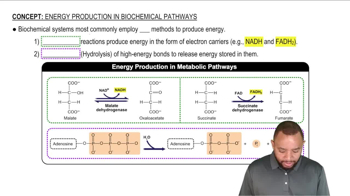
Energy Production In Biochemical Pathways Concept 1

NADPH

NADPH (Nicotinamide adenine dinucleotide phosphate) is a cofactor that acts as a reducing agent in various biochemical reactions. It is vital for anabolic reactions, such as fatty acid and cholesterol synthesis, and for the detoxification of reactive oxygen species. The production of NADPH in the PPP is essential for maintaining the balance of oxidation and reduction in cells, supporting various biosynthetic processes.

Ribose-5-Phosphate

Ribose-5-phosphate is a sugar phosphate that serves as a precursor for the synthesis of nucleotides and nucleic acids. It is produced in the Pentose Phosphate Pathway and is crucial for the formation of RNA and DNA. The availability of ribose-5-phosphate is particularly important in rapidly dividing cells, where nucleotide synthesis is required for cell proliferation.
Recommended video:
Guided course
1:34
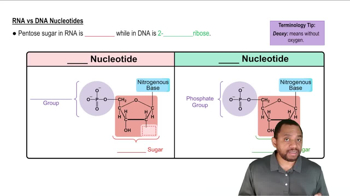
Intro to Nucleic Acids Concept 2