Pearson+ LogoPearson+ Logo
Ch.22 Carbohydrate Metabolism
McMurry - Fundamentals of GOB 8th Edition
McMurry8th EditionFundamentals of GOBISBN: 9780134015187Not the one you use?Change textbook
Chapter 22, Problem 42b

Which cells, liver, muscle, or brain, use the following pathways?
b. Gluconeogenesis

Verified step by step guidance
1
Understand the concept of gluconeogenesis: Gluconeogenesis is the metabolic pathway through which glucose is synthesized from non-carbohydrate precursors such as lactate, glycerol, and amino acids. This process is crucial for maintaining blood glucose levels during fasting or intense exercise.
Identify the primary site of gluconeogenesis: The liver is the main organ responsible for gluconeogenesis. It plays a central role in regulating blood glucose levels by producing glucose when dietary intake is insufficient.
Consider the role of the kidneys: While the liver is the primary site, the kidneys can also perform gluconeogenesis, particularly during prolonged fasting or starvation. However, this is a secondary role compared to the liver.
Evaluate the role of muscle cells: Muscle cells do not perform gluconeogenesis. Instead, they rely on glycogenolysis (breaking down glycogen into glucose) and glycolysis (breaking down glucose for energy). Muscle cells lack the necessary enzymes to complete the gluconeogenesis pathway.
Assess the role of brain cells: Brain cells do not perform gluconeogenesis. Instead, they depend on a constant supply of glucose from the blood for energy. During prolonged fasting, the brain can adapt to use ketone bodies as an alternative energy source.

Verified video answer for a similar problem:

This video solution was recommended by our tutors as helpful for the problem above.
Video duration:
2m
Was this helpful?

Key Concepts

Here are the essential concepts you must grasp in order to answer the question correctly.

Gluconeogenesis

Gluconeogenesis is the metabolic pathway through which organisms synthesize glucose from non-carbohydrate precursors. This process primarily occurs in the liver and, to a lesser extent, in the kidneys. It is crucial for maintaining blood glucose levels during fasting or intense exercise, ensuring that energy supply is sustained for vital functions.
Recommended video:
Guided course
1:23
Gluconeogenesis Example 2

Liver Function in Metabolism

The liver plays a central role in metabolic processes, including gluconeogenesis. It acts as a hub for converting excess nutrients into glucose and storing it as glycogen. The liver's ability to perform gluconeogenesis is vital for regulating blood sugar levels, especially during periods of low carbohydrate intake.
Recommended video:
Guided course
02:16
Logarithmic Functions

Muscle and Brain Metabolism

While muscle and brain tissues primarily rely on glucose for energy, they do not perform gluconeogenesis. Muscle cells can utilize glucose for energy and store it as glycogen, but they lack the necessary enzymes for gluconeogenesis. The brain, on the other hand, requires a constant supply of glucose, which is provided by the liver through gluconeogenesis and glycogenolysis.
Recommended video:
Guided course
0:52
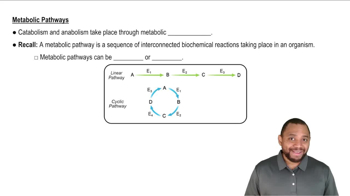
Metabolic Pathways Concept 2