Pearson+ LogoPearson+ Logo
Ch.25 Protein and Amino Acid Metabolism
McMurry - Fundamentals of GOB 8th Edition
McMurry8th EditionFundamentals of GOBISBN: 9780134015187Not the one you use?Change textbook
Chapter 25, Problem 50

The pancreatic proteases are synthesized and stored as zymogens. They are activated after the pancreatic juices enter the small intestine. Why is it essential that these enzymes be synthesized and stored in their inactive forms?

Verified step by step guidance
1
Understand the role of pancreatic proteases: Pancreatic proteases are enzymes that break down proteins into smaller peptides and amino acids during digestion. Examples include trypsin and chymotrypsin.
Define zymogens: Zymogens are inactive precursors of enzymes. They require a biochemical change, such as cleavage of a specific peptide bond, to become active enzymes.
Explain the necessity of zymogen storage: If pancreatic proteases were synthesized and stored in their active forms, they could digest proteins within the pancreas itself, leading to tissue damage and conditions like pancreatitis.
Describe the activation process: Zymogens are activated only after they are secreted into the small intestine, where specific enzymes (e.g., enterokinase) convert them into their active forms. This ensures that protein digestion occurs only in the appropriate location.
Summarize the importance of zymogen synthesis: Synthesizing and storing proteases as zymogens prevents premature activation and protects the pancreas from self-digestion, ensuring the enzymes function only when and where they are needed.

Verified video answer for a similar problem:

This video solution was recommended by our tutors as helpful for the problem above.
Video duration:
3m
Was this helpful?

Key Concepts

Here are the essential concepts you must grasp in order to answer the question correctly.

Zymogens

Zymogens are inactive enzyme precursors that require a biochemical change to become active enzymes. In the case of pancreatic proteases, they are synthesized as zymogens to prevent the enzymes from digesting the tissues of the pancreas itself, which could lead to damage or pancreatitis.
Recommended video:
Guided course
2:21
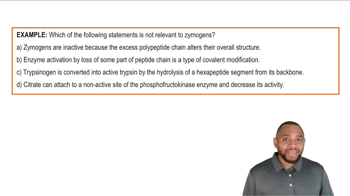
Zymogens Example 1

Activation Process

The activation of zymogens occurs in the small intestine, where they are converted into active enzymes by specific proteolytic cleavage. This process ensures that the enzymes are only activated when they reach the appropriate environment, allowing for controlled digestion of proteins without harming the pancreas.
Recommended video:
Guided course
2:25
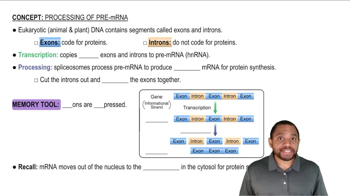
Processing of Pre-mRNA Concept 1

Digestive Enzyme Regulation

The regulation of digestive enzymes is crucial for maintaining homeostasis in the digestive system. By storing enzymes in their inactive forms, the body can prevent premature activation, which could lead to inappropriate digestion of bodily tissues and ensure that enzymes are only active when needed for food digestion.
Recommended video:
Guided course
1:17
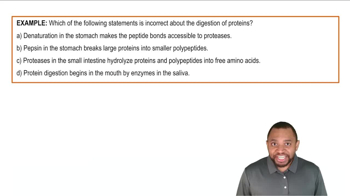
Digestion of Proteins Example 1