교과서 질문
Predict the product(s) that would result when the following molecules are allowed to react under the following conditions: (v) H2O. If there is no reaction, write 'no reaction.'
(a)
1211
views

 Mullins 1st EditionCh. 13 - Alcohols, Ethers and Related Compounds: Substitution and Elimination문제 89a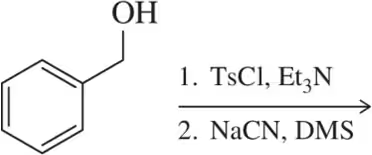
 검증된 단계별 안내

 02:16
02:16
 02:36
02:36 05:09
05:09Predict the product(s) that would result when the following molecules are allowed to react under the following conditions: (v) H2O. If there is no reaction, write 'no reaction.'
(a)
Predict the product for each of the following reactions.
(c)
Predict the product for each of the following reactions.
(d)
Predict the product(s) that would result when the following molecules are allowed to react under the following conditions: (v) H2O; (vi) NaOH, H2O. If there is no reaction, write 'no reaction.'
(f)
Predict the product for each of the following reactions.
(b)
Predict the product(s) that would result when the following molecules are allowed to react under the following conditions: (i) 1. BH3 2. NaOH, H2O2 (ii) 1. Hg(OAc)2 2. NaBH4 (iii) H2SO4 , H2O (iv) 1. OsO4 2. NaHSO3 (v) H2O (vi) NaOH, H2O . If there is no reaction, write 'no reaction.'
(d)