뒤로
뒤로 Mullins 1st EditionCh. 13 - Alcohols, Ethers and Related Compounds: Substitution and Elimination
문제 38
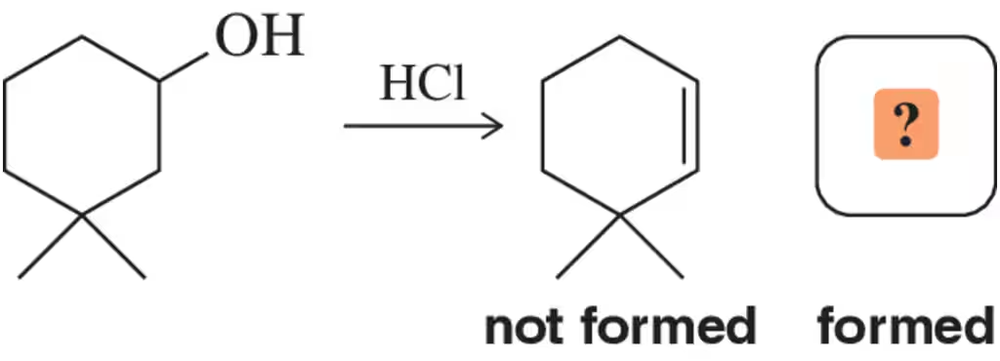
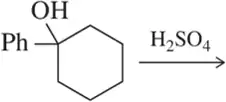
When HCl was used for the attempted dehydration reaction shown, a reaction occurred, but none of the desired product was formed. Suggest the identity of the actual product obtained.
문제 39
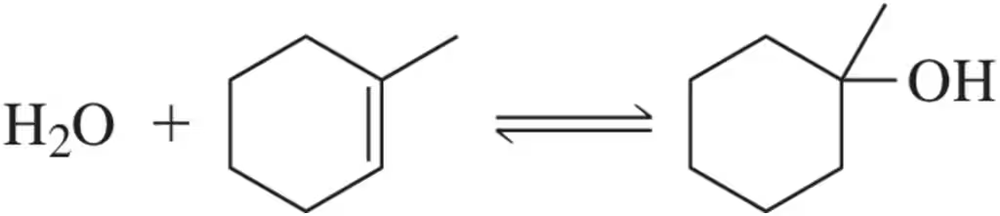
Predict which side of the equilibrium is favored by ∆H, ∆G, and ∆S.
문제 40a
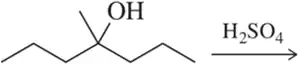
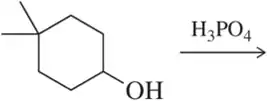
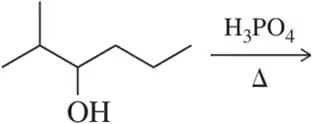
Predict the major product of the following elimination reactions.
(a)
문제 40b
Predict the major product of the following elimination reactions.
(b)
문제 40c
Predict the major product of the following elimination reactions.
(c)
문제 41a
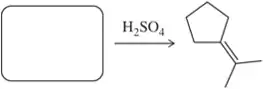
Identify the alcohol(s) that would produce the following alkenes under the given conditions.
(a)
문제 41b
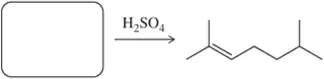
Identify the alcohol(s) that would produce the following alkenes under the given conditions.
(b)
문제 41c
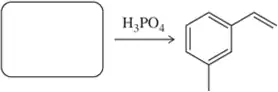
Identify the alcohol(s) that would produce the following alkenes under the given conditions.
(c)
문제 42
Treatment of the following alcohol was expected to give alkene A. Instead, B was produced as the major product. Suggest a mechanism by which B formed.
문제 43a
Predict the product(s) of the reactions shown.
(a)
문제 43b
Predict the product(s) of the reactions shown.
(b)
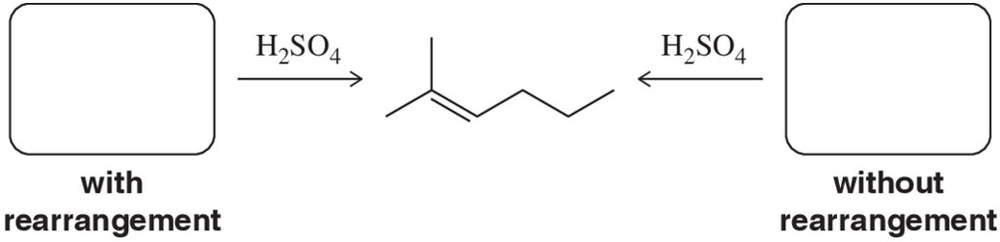
문제 44a
Identify two different alcohols that can be dehydrated (one with rearrangement) to form the alkene shown.
문제 44b
Identify two different alcohols that can be dehydrated (one without rearrangement) to form the alkene shown.
문제 45
Show a reaction coordinate diagram for the two processes in Figure 13.41 that rationalizes pathway B as the one that gives the major product.
<IMAGE>
문제 46b
Predict the product of the following pinacol rearrangements.
(b)
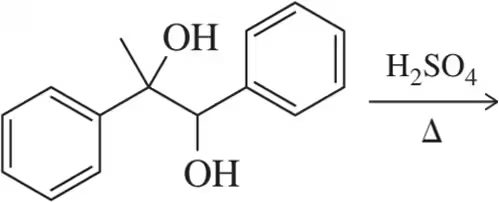
문제 46c
Predict the product of the following pinacol rearrangements.
(c)
문제 47c
Suggest an alkene that, in two steps, could be converted into each of the following ketones. Each sequence should involve a pinacol rearrangement.
(c)
문제 48
The intermediates for the Swern oxidation, a reaction introduced in Section 13.9.4, are shown. Provide the arrow-pushing mechanism that rationalizes the formation of each intermediate and the final product(s).
문제 49
In Assessment 13.48, identify the individual step that represents the general mechanism for all alcohol oxidation reactions.
문제 50
Every oxidation is accompanied by a reduction. Identify the species that is reduced in the Swern oxidation in Assessment 13.48.
문제 51a
Identify the alcohols that would undergo oxidation to produce the following carbonyl compounds.
(a)
문제 51b
Identify the alcohols that would undergo oxidation to produce the following carbonyl compounds.
(b)
문제 51c
Identify the alcohols that would undergo oxidation to produce the following carbonyl compounds.
(c)
문제 51d
Identify the alcohols that would undergo oxidation to produce the following carbonyl compounds.
(d)
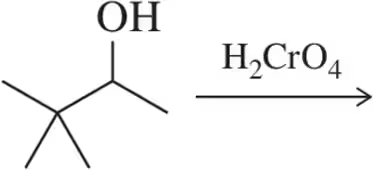
문제 52a
Predict the product of the oxidation reactions shown.
(a)
문제 52b
Predict the product of the oxidation reactions shown.
(b)
문제 53e
The intermediates for the oxidation of isopropanol to acetone are shown. Calculate oxidation numbers for the indicated atoms, then use them to determine in which step oxidation occurs.
(e)
문제 54
Tertiary (3°)alcohols are not oxidized by chromic acid. Why?
문제 55
Though ketones, like aldehydes, are in equilibrium with a hydrated form, they cannot be further oxidized. Why?
문제 56
If there is no water present, the hydrate of an aldehyde cannot form. Could an aldehyde itself (not the hydrate) be oxidized to a carboxylic acid? Why?