Ch. 2 - General Chemistry Translated: Finding the Electrons
Mullins - Organic Chemistry: A Learner Centered Approach 1st Edition
Mullins1st EditionOrganic Chemistry: A Learner Centered ApproachISBN: 9780137566471당신이 사용하는 게 아니라요?교과서 변경
1장, 문제 52

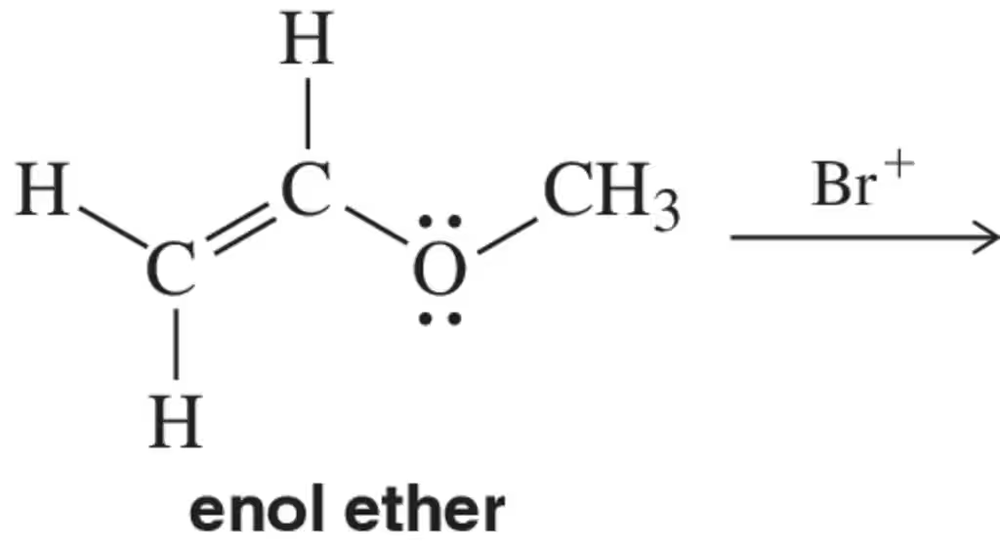
Which atoms in the enol ether would you expect to react with Br⁺ ?

검증된 단계별 안내
1
Step 1: Analyze the structure of the enol ether. The enol ether contains a double bond between the two carbon atoms (C=C) and an oxygen atom bonded to one of the carbons. The oxygen atom has lone pairs of electrons, making it nucleophilic.
Step 2: Understand the reactivity of Br⁺. Bromine in its Br⁺ form is electrophilic, meaning it seeks out regions of high electron density to react with.
Step 3: Identify the regions of high electron density in the enol ether. The double bond (C=C) is electron-rich due to the π-electrons, and the oxygen atom is electron-rich due to its lone pairs.
Step 4: Predict the interaction. Br⁺ is likely to react with the π-electrons of the double bond (C=C) or the lone pairs on the oxygen atom. These are the two nucleophilic sites in the molecule.
Step 5: Consider the most likely site of attack. The double bond (C=C) is typically more reactive toward electrophiles like Br⁺ because the π-electrons are more accessible compared to the lone pairs on oxygen. However, the oxygen atom may also participate depending on the reaction conditions.

비슷한 문제에 대한 검증된 영상 답변:

이 영상 해법은 위 문제에 도움이 된다고 튜터들이 추천한 것입니다.
도움이 되었나요?

주요 개념

질문에 올바르게 답하기 위해 반드시 이해해야 하는 핵심 개념들은 다음과 같습니다.

Enol Ethers

Enol ethers are compounds that contain a carbon-carbon double bond (alkene) adjacent to an ether functional group (R-O-R'). They are characterized by the presence of a hydroxyl group (OH) and a carbonyl group (C=O) in their tautomeric forms. Understanding the structure of enol ethers is crucial for predicting their reactivity, particularly in electrophilic addition reactions.
추천 영상:
02:26
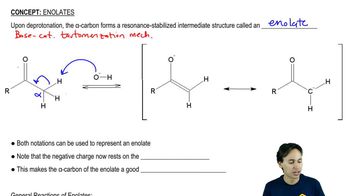
Formation of Enolates

Electrophilic Addition

Electrophilic addition is a fundamental reaction mechanism in organic chemistry where an electrophile reacts with a nucleophile, resulting in the formation of a new bond. In the context of the enol ether, the Br⁺ ion acts as an electrophile that can react with the nucleophilic sites in the molecule, such as the double bond or the oxygen atom, leading to the formation of a brominated product.
추천 영상:
09:23
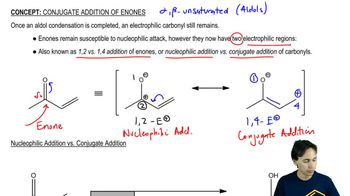
1,2 vs 1,4 Addition

Nucleophilicity of Oxygen

Oxygen in enol ethers can exhibit nucleophilic behavior due to its lone pairs of electrons. This property allows it to interact with electrophiles like Br⁺. The nucleophilicity of oxygen is significant in determining which atoms in the enol ether will react with the electrophile, influencing the overall reaction pathway and product formation.
추천 영상:
08:27
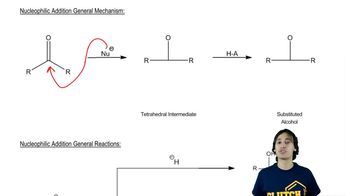
Nucleophilic Addition