Which atoms in the enol ether would you expect to react with Br⁺ ?
Ch. 2 - General Chemistry Translated: Finding the Electrons

Mullins1st EditionOrganic Chemistry: A Learner Centered ApproachISBN: 9780137566471당신이 사용하는 게 아니라요?교과서 변경
1장, 문제 49a
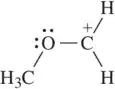
For each of the molecules shown, do the following:
(i) Identify all pushable pairs.
(ii) Identify all places where electrons can be pushed.
(iii) Draw one valid resonance structure.
(a) 
검증된 단계별 안내1
Step 1: Begin by identifying all pushable pairs in the molecule. Pushable pairs include lone pairs of electrons, π-bonds (double or triple bonds), and negative charges. Carefully examine the structure of the molecule to locate these electron sources.
Step 2: Identify all places where electrons can be pushed. These include atoms with positive charges, electron-deficient atoms (such as carbocations), and atoms that can accept electrons due to their electronegativity or hybridization. Look for regions in the molecule where electron movement can stabilize the structure.
Step 3: Apply the rules of resonance to determine valid electron movement. Electrons can be pushed from pushable pairs to electron-accepting regions, ensuring that the resulting resonance structure adheres to the octet rule and does not violate fundamental chemical principles.
Step 4: Draw one valid resonance structure based on the electron movement identified in the previous step. Ensure that the new structure maintains the correct formal charges and connectivity of atoms.
Step 5: Verify the resonance structure by checking that it is a valid representation of the molecule. Confirm that all atoms have appropriate formal charges, the octet rule is satisfied where applicable, and the structure is consistent with the original molecule.

비슷한 문제에 대한 검증된 영상 답변:
이 영상 해법은 위 문제에 도움이 된다고 튜터들이 추천한 것입니다.
영상 길이:
2m주요 개념
질문에 올바르게 답하기 위해 반드시 이해해야 하는 핵심 개념들은 다음과 같습니다.
Resonance Structures
Resonance structures are different Lewis structures for the same molecule that depict the same arrangement of atoms but differ in the distribution of electrons. These structures help illustrate the delocalization of electrons within a molecule, which can stabilize it. Understanding resonance is crucial for predicting the reactivity and properties of organic compounds.
추천 영상:
Drawing Resonance Structures
Electron Pushing (Curved Arrows)
Electron pushing is a method used in organic chemistry to show the movement of electrons during chemical reactions and resonance. Curved arrows are drawn from electron-rich areas (nucleophiles) to electron-poor areas (electrophiles) to indicate the flow of electron density. Mastery of this technique is essential for visualizing reaction mechanisms and understanding how molecular structures change.
추천 영상:
The 18 and 16 Electron Rule
Pushable Pairs
Pushable pairs refer to pairs of electrons that can be moved in resonance structures or during reactions. These include lone pairs and pi bonds that can be shifted to form new bonds or to stabilize charges. Identifying pushable pairs is vital for constructing valid resonance structures and predicting the behavior of molecules in various chemical contexts.
추천 영상:
가이드 코스
Base Pairing Concept 1
관련 실천
교과서 질문
1346
views
교과서 질문
i) Which of the following resonance structures represents the 'actual' structure of the molecule shown? (ii) Which contributes more to the resonance hybrid? (iii) Why?
(a)
(b)
(c)
1036
views
교과서 질문
Each pair of structures represents two valid resonance structures. Use the arrow-pushing formalism to justify the formation of the one on the left from the one on the right.
(b)
1121
views
교과서 질문
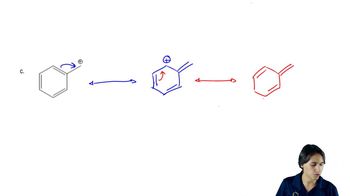
Draw the resonance structure that would result from the indicated movement of electrons.
(a)
935
views
교과서 질문
To which atom of formaldehyde would you expect H+ to add?
1331
views
교과서 질문
Each pair of structures represents two valid resonance structures. Use the arrow-pushing formalism to justify the formation of the one on the left from the one on the right.
(a)
1244
views