Ch. 8 - Alkenes 1: Properties and Electrophilic Additions
Mullins - Organic Chemistry: A Learner Centered Approach 1st Edition
Mullins1st EditionOrganic Chemistry: A Learner Centered ApproachISBN: 9780137566471당신이 사용하는 게 아니라요?교과서 변경
7장, 문제 28

For the enzyme isopentenyl pyrophosphate isomerase, IPP binds tightly as a result of interactions between the active site amino acid residues and the diphosphate of IPP. Without concerning yourself with the structure of amino acids, what charges might you expect to be present in the active site to hold IPP in place so that the enzymatic reactions can occur?

검증된 단계별 안내
1
Understand the structure of isopentenyl pyrophosphate (IPP), which contains a diphosphate group. This group is negatively charged due to the presence of phosphate ions.
Consider the nature of enzyme-substrate interactions. Enzymes often use electrostatic interactions to stabilize substrate binding. Therefore, positively charged residues in the active site are likely to interact with the negatively charged diphosphate group of IPP.
Identify common positively charged amino acid residues that might be present in the active site. These include lysine (Lys) and arginine (Arg), which have positively charged side chains at physiological pH.
Recognize that the active site may also contain other polar or charged residues that can form hydrogen bonds or ionic interactions with the diphosphate group, further stabilizing IPP binding.
Consider the overall environment of the active site, which may be optimized to enhance the binding affinity through a combination of electrostatic interactions, hydrogen bonding, and van der Waals forces, ensuring that IPP is held securely for the enzymatic reaction to proceed.

비슷한 문제에 대한 검증된 영상 답변:

이 영상 해법은 위 문제에 도움이 된다고 튜터들이 추천한 것입니다.
영상 길이:
4m

주요 개념

질문에 올바르게 답하기 위해 반드시 이해해야 하는 핵심 개념들은 다음과 같습니다.

Enzyme Active Site

The active site of an enzyme is the region where substrate molecules bind and undergo a chemical reaction. It is typically a pocket or groove on the enzyme's surface, formed by specific amino acid residues that create a unique chemical environment. This environment facilitates the binding of substrates and stabilizes transition states, enhancing the rate of the reaction.
추천 영상:
가이드 코스
4:47
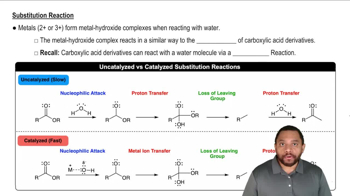
Metal Ion Catalysis: Water Activation Concept 2

Charge Interactions

Charge interactions are crucial for substrate binding in enzyme active sites. These interactions can include ionic bonds, where oppositely charged groups attract each other, and hydrogen bonds, which involve a hydrogen atom shared between electronegative atoms. In the case of IPP, the diphosphate group likely interacts with positively charged residues in the active site, stabilizing its binding and positioning for catalysis.
추천 영상:
01:34
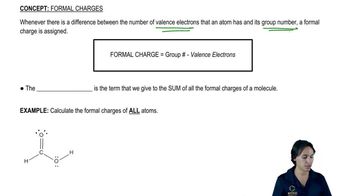
Calculating formal and net charge.

Diphosphate Group

A diphosphate group consists of two phosphate units linked together, carrying a negative charge due to the presence of oxygen atoms bonded to phosphorus. In biochemical contexts, such as enzyme-substrate interactions, the negative charge of diphosphate groups can form electrostatic interactions with positively charged amino acid residues, aiding in substrate stabilization and proper orientation for enzymatic activity.
추천 영상:
04:42
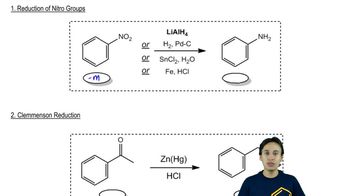
Sequence Groups