Ch. 8 - Alkenes 1: Properties and Electrophilic Additions
Mullins - Organic Chemistry: A Learner Centered Approach 1st Edition
Mullins1st EditionOrganic Chemistry: A Learner Centered ApproachISBN: 9780137566471당신이 사용하는 게 아니라요?교과서 변경
7장, 문제 27

Imagine an electrophilic addition where the first step is exothermic. Which carbocation—2°, 3°, or neither—would you expect to form preferentially? Explain.

검증된 단계별 안내
1
Begin by understanding the concept of electrophilic addition. This is a reaction where an electrophile reacts with a nucleophile, typically an alkene, to form a carbocation intermediate.
Examine the image provided. It shows two possible pathways for the formation of carbocations: Path A leading to a secondary (2°) carbocation and Path B leading to a tertiary (3°) carbocation.
Note the exothermic nature of the first step, indicated by ΔH < 0. This suggests that the reaction releases energy, favoring the formation of a more stable carbocation.
Consider the stability of carbocations. Tertiary (3°) carbocations are generally more stable than secondary (2°) carbocations due to greater hyperconjugation and inductive effects from surrounding alkyl groups.
Based on the stability preference and the exothermic nature of the reaction, the tertiary (3°) carbocation is expected to form preferentially, as it is more stable and the reaction favors the formation of the most stable intermediate.

비슷한 문제에 대한 검증된 영상 답변:

이 영상 해법은 위 문제에 도움이 된다고 튜터들이 추천한 것입니다.
도움이 되었나요?

주요 개념

질문에 올바르게 답하기 위해 반드시 이해해야 하는 핵심 개념들은 다음과 같습니다.

Electrophilic Addition

Electrophilic addition is a reaction mechanism where an electrophile reacts with a nucleophile, typically involving alkenes or alkynes. In this process, the double or triple bond is broken, allowing the electrophile to bond with one of the carbon atoms, leading to the formation of a carbocation intermediate. The stability of the carbocation formed is crucial in determining the reaction pathway and the final product.
추천 영상:
09:23
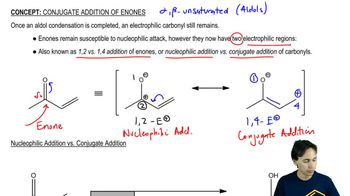
1,2 vs 1,4 Addition

Carbocation Stability

Carbocation stability is influenced by the degree of substitution on the positively charged carbon atom. Tertiary (3°) carbocations are more stable than secondary (2°) due to hyperconjugation and inductive effects from surrounding alkyl groups. This stability affects the likelihood of forming a particular carbocation during electrophilic addition reactions, with more stable carbocations being favored in the reaction pathway.
추천 영상:
05:58
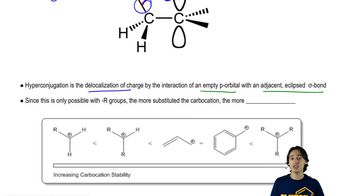
Determining Carbocation Stability

Exothermic Reactions

An exothermic reaction is one that releases energy, usually in the form of heat, during the reaction process. In the context of electrophilic addition, if the first step is exothermic, it suggests that the formation of the carbocation is energetically favorable. This can influence the reaction mechanism, potentially favoring the formation of more stable carbocations, such as tertiary ones, over less stable options.
추천 영상:
05:09
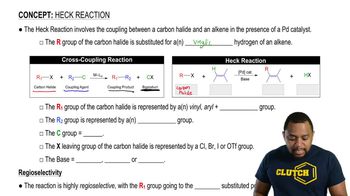
Heck Reaction