Ch. 22 - Condensations and Alpha Substitutions of Carbonyl Compounds
Wade - Organic Chemistry 9th Edition
Wade9th EditionOrganic ChemistryISBN: 9780135213728Not the one you use?Change textbook
Chapter 22, Problem 60a,b,c(1)

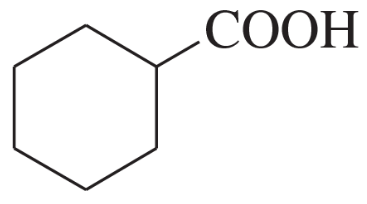
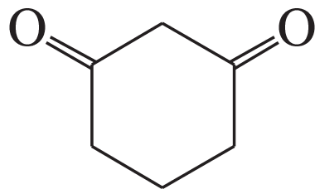
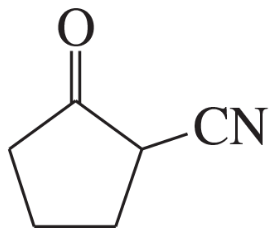
For each molecule shown below,
1. indicate the most acidic hydrogens.
(a)
(b)
(c)

Verified step by step guidance
1
Step 1: Understand the concept of acidity in organic molecules. Acidity is determined by the ability of a hydrogen atom to dissociate as a proton (H⁺). Factors such as electronegativity, resonance stabilization, inductive effects, and hybridization of the atom bonded to the hydrogen play a role in determining acidity.
Step 2: For molecule (a), identify all the hydrogens in the structure. Look for functional groups such as carboxylic acids, alcohols, phenols, or other acidic groups. Determine which hydrogen is most acidic by evaluating the stability of the conjugate base formed after deprotonation.
Step 3: For molecule (b), repeat the process. Identify all hydrogens and analyze the surrounding environment. Consider resonance effects (if the conjugate base can be stabilized by resonance), inductive effects (electron-withdrawing groups nearby), and hybridization (sp-hybridized carbons are more acidic than sp² or sp³).
Step 4: For molecule (c), follow the same approach. Identify hydrogens attached to functional groups or atoms with high electronegativity. Evaluate the stability of the conjugate base using resonance, inductive effects, and hybridization.
Step 5: Compare the acidity of the hydrogens in each molecule. The most acidic hydrogen will be the one whose removal results in the most stable conjugate base. Indicate the most acidic hydrogen for each molecule based on your analysis.

Verified video answer for a similar problem:

This video solution was recommended by our tutors as helpful for the problem above.
Was this helpful?

Key Concepts

Here are the essential concepts you must grasp in order to answer the question correctly.

Acidity in Organic Chemistry

Acidity refers to the ability of a molecule to donate a proton (H+). In organic chemistry, the strength of an acid is often determined by the stability of the conjugate base formed after deprotonation. Factors influencing acidity include electronegativity, resonance stabilization, and the inductive effect, which can enhance or diminish the ability of a hydrogen atom to be released as a proton.
Recommended video:
Guided course
00:56
What is an organic molecule?

Identifying Acidic Hydrogens

Acidic hydrogens are typically found on functional groups such as alcohols, carboxylic acids, and amines. To identify the most acidic hydrogens in a molecule, one must analyze the surrounding atoms and groups that can stabilize the negative charge of the conjugate base. The presence of electronegative atoms or resonance structures can significantly increase the acidity of specific hydrogens.
Recommended video:
Guided course
00:48
The definition of hydrogenation.

Resonance and Acidity

Resonance refers to the delocalization of electrons across multiple atoms in a molecule, which can stabilize the conjugate base formed after deprotonation. When a hydrogen is removed from a molecule, if the resulting negative charge can be delocalized through resonance, the acidity of that hydrogen increases. Understanding resonance structures is crucial for predicting which hydrogens are more likely to be acidic.
Recommended video:
Guided course
03:04
Drawing Resonance Structures
Related Practice
Textbook Question

For each molecule shown below,

1. indicate the most acidic hydrogens.

2. draw the important resonance contributors of the anion that results from removal of the most acidic hydrogen.

(e)

567
views

Textbook Question

Show how you would use Robinson annulations to synthesize the following compounds. Work backward, remembering that the cyclohexenone is the new ring and that the double bond of the cyclohexenone is formed by the aldol with dehydration. Take apart the double bond, then see what structures the Michael donor and acceptor must have.

(a)

737
views
Textbook Question

For each molecule shown below,

2. draw the important resonance contributors of the anion that results from removal of the most acidic hydrogen.

(a)

(b)

(c)

795
views
Textbook Question

Show how you would use Robinson annulations to synthesize the following compounds. Work backward, remembering that the cyclohexenone is the new ring and that the double bond of the cyclohexenone is formed by the aldol with dehydration. Take apart the double bond, then see what structures the Michael donor and acceptor must have.

(b)

610
views
Textbook Question

For each molecule shown below,

1. indicate the most acidic hydrogens.

2. draw the important resonance contributors of the anion that results from removal of the most acidic hydrogen.

(d)

613
views
Textbook Question

For each molecule shown below,

1. indicate the most acidic hydrogens.

2. draw the important resonance contributors of the anion that results from removal of the most acidic hydrogen.

(g)

729
views