Name the structures of the female duct system, and describe the important functions of each.
Verified step by step guidance
1
The female duct system consists of the following structures: the uterine tubes (fallopian tubes), the uterus, and the vagina. Each structure plays a specific role in the reproductive process.
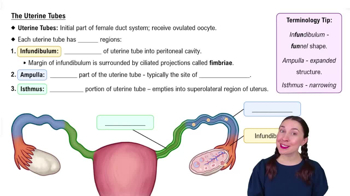
The uterine tubes (fallopian tubes) are paired tubes that extend from the ovaries to the uterus. Their primary function is to transport the ovulated oocyte from the ovary to the uterus. Fertilization typically occurs in the ampulla, the widest part of the uterine tube.
The uterus is a hollow, muscular organ located in the pelvis. Its main function is to provide a site for implantation of the fertilized egg and to support fetal development during pregnancy. The uterus has three layers: the endometrium (inner lining), the myometrium (muscular layer), and the perimetrium (outer layer).
The vagina is a muscular tube that extends from the cervix of the uterus to the external body. It serves as the birth canal during delivery, the passageway for menstrual flow, and the site of sperm deposition during intercourse.
Together, these structures work in coordination to facilitate the processes of ovulation, fertilization, implantation, and childbirth, ensuring the continuation of the reproductive cycle.
Verified video answer for a similar problem:
This video solution was recommended by our tutors as helpful for the problem above
Video duration:
2m
Play a video:
Was this helpful?
Key Concepts
Here are the essential concepts you must grasp in order to answer the question correctly.
Female Duct System
The female duct system, also known as the female reproductive tract, includes several key structures: the ovaries, fallopian tubes, uterus, cervix, and vagina. Each of these components plays a vital role in reproduction, from the production of eggs in the ovaries to the passage of sperm and the eventual delivery of a baby.
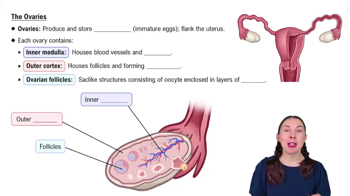
Ovaries are the female reproductive organs responsible for producing eggs (ova) and hormones such as estrogen and progesterone. They play a crucial role in the menstrual cycle and fertility, as they release eggs during ovulation, which can then be fertilized by sperm.
Fallopian tubes are the structures that connect the ovaries to the uterus. Their primary function is to transport the egg from the ovary to the uterus and provide the site for fertilization, where sperm can meet the egg. Any blockage or damage to these tubes can lead to infertility.