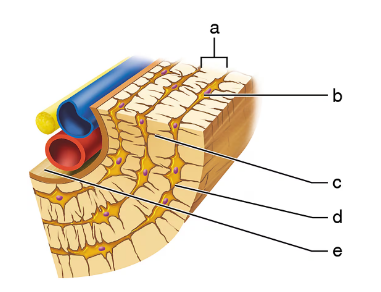
Match the appropriate name with the structure in the figure. 3. Lacuna
Verified step by step guidance
1
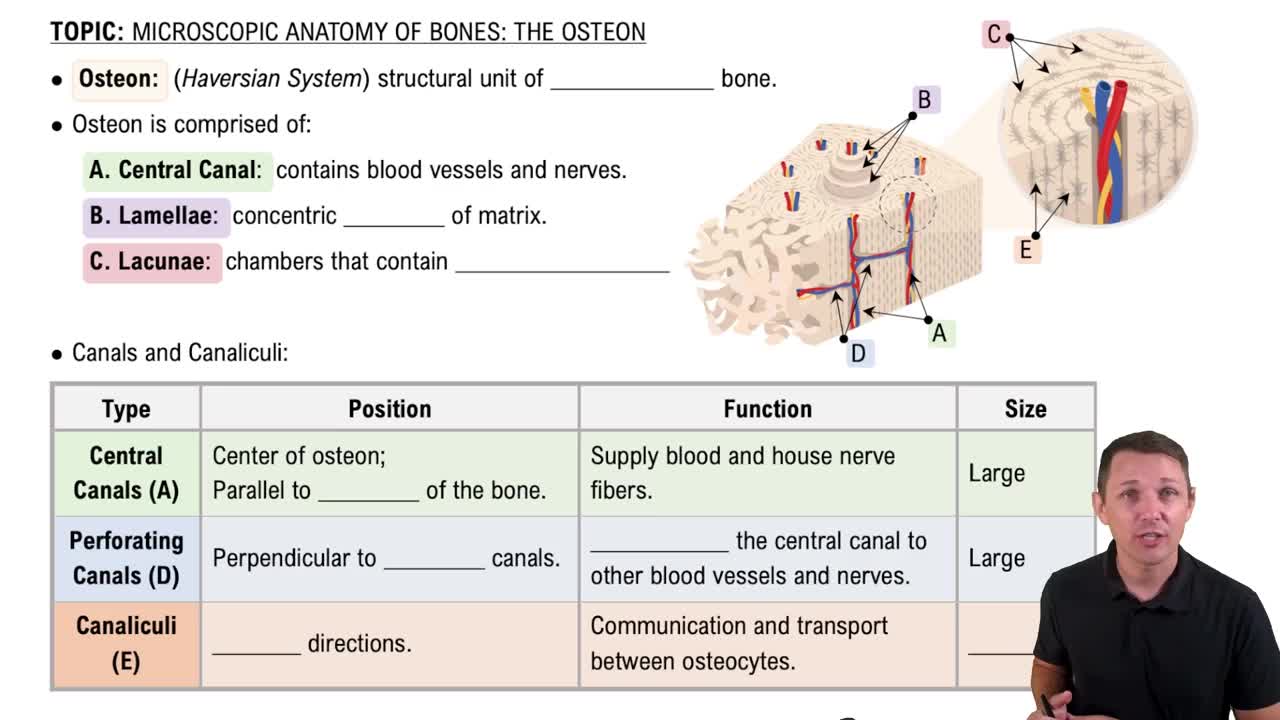
Understand the term 'lacuna': In Anatomy & Physiology, a lacuna refers to a small cavity or space within a tissue or structure. It is commonly associated with bone tissue, where it houses osteocytes (bone cells).
Identify the context: Lacunae are found in compact and spongy bone tissue. They are located within the matrix of the bone and are connected by canaliculi, which allow for communication and nutrient exchange between osteocytes.
Relate lacuna to its function: Lacunae play a critical role in maintaining the health of bone tissue by providing a protective space for osteocytes and facilitating nutrient and waste exchange.
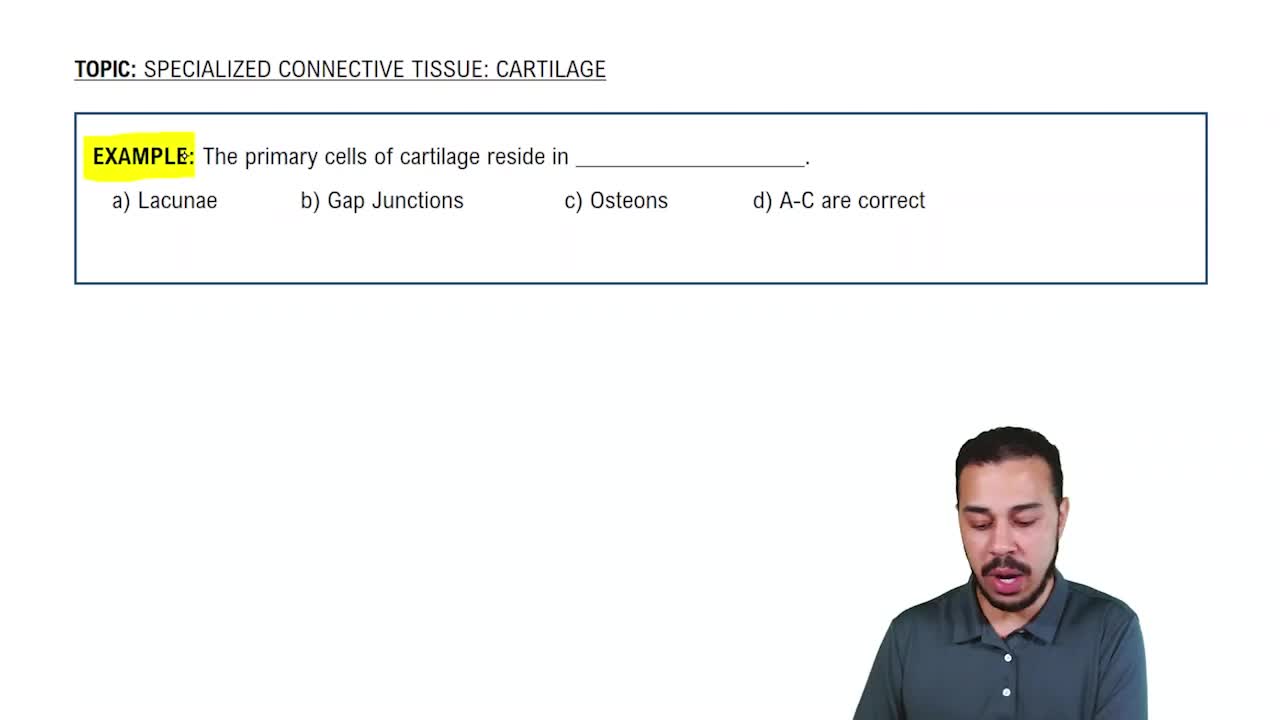
Consider other examples: Lacunae can also refer to spaces in cartilage tissue, where chondrocytes (cartilage cells) reside. This highlights the broader application of the term in connective tissues.
Review multiple-choice options: Based on the definition and context provided, evaluate the choices given in the problem to determine which ones correctly apply to the term 'lacuna.'
Verified video answer for a similar problem:
This video solution was recommended by our tutors as helpful for the problem above
Video duration:
1m
Play a video:
Was this helpful?
Key Concepts
Here are the essential concepts you must grasp in order to answer the question correctly.
Lacuna
A lacuna refers to a gap or missing part in a text, manuscript, or other forms of documentation. In various fields, including literature and law, it signifies an absence that can lead to ambiguity or misinterpretation. Understanding the context of a lacuna is crucial for analyzing its implications on the overall meaning or argument presented.
Specialized Connective Tissue: Cartilage Example 1
Contextual Analysis
Contextual analysis involves examining the circumstances surrounding a text or concept to better understand its meaning and significance. This includes considering historical, cultural, and situational factors that influence interpretation. By applying contextual analysis, one can uncover deeper insights and address potential misunderstandings arising from lacunae.
Interpretation is the process of explaining or making sense of a text, idea, or phenomenon. It requires critical thinking and the ability to draw connections between various elements within the material. In the case of a lacuna, interpretation becomes essential to fill in the gaps and derive coherent conclusions, ensuring a comprehensive understanding of the subject matter.