a. Define blood pressure. Differentiate between systolic and diastolic blood pressure. b. What is the normal blood pressure value for an adult?
Verified step by step guidance
1
Step 1: Define blood pressure as the force exerted by circulating blood on the walls of blood vessels, primarily arteries. It is a vital physiological parameter indicating cardiovascular health.
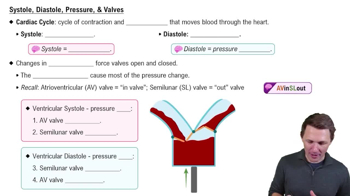
Step 2: Explain systolic blood pressure as the pressure in the arteries when the heart's ventricles contract and pump blood out into the arteries. This represents the maximum pressure during a heartbeat.
Step 3: Describe diastolic blood pressure as the pressure in the arteries when the heart is at rest between beats, specifically during ventricular relaxation. This is the minimum pressure in the arteries.
Step 4: Clarify that blood pressure is typically recorded as systolic over diastolic pressure, for example, 120/80 mmHg, where 120 represents systolic and 80 represents diastolic pressure.
Step 5: State the normal blood pressure range for a healthy adult, which is generally considered to be around 120/80 mmHg, but can vary slightly depending on individual health and measurement conditions.
Verified video answer for a similar problem:
This video solution was recommended by our tutors as helpful for the problem above
Video duration:
2m
Play a video:
Was this helpful?
Key Concepts
Here are the essential concepts you must grasp in order to answer the question correctly.
Blood Pressure
Blood pressure is the force exerted by circulating blood against the walls of blood vessels. It is a vital sign indicating how well blood is flowing through the body and is usually measured in millimeters of mercury (mmHg).
Systolic blood pressure is the pressure in the arteries when the heart contracts and pumps blood out, while diastolic blood pressure is the pressure when the heart relaxes between beats. These two values represent the maximum and minimum pressures in the arteries.
Normal blood pressure for a healthy adult is typically around 120/80 mmHg, where 120 represents systolic and 80 represents diastolic pressure. Values outside this range may indicate hypertension or hypotension, requiring medical attention.