Ch. 2 Chemistry Comes Alive
Marieb - Human Anatomy & Physiology 7th Edition
Marieb, Hoehn7th EditionHuman Anatomy & PhysiologyISBN: 9780805359091Not the one you use?Change textbook
Chapter 2, Problem 13

A deficiency in this element can be expected to reduce the hemoglobin content of blood:
a. Fe
b. I
c. F
d. Ca
e. K

Verified step by step guidance
1
Step 1: Understand the role of hemoglobin in the blood. Hemoglobin is a protein in red blood cells responsible for carrying oxygen from the lungs to the tissues.
Step 2: Identify the element essential for hemoglobin synthesis. Hemoglobin contains iron (Fe) atoms that bind oxygen molecules, making iron critical for its function.
Step 3: Review the options given: Fe (iron), I (iodine), F (fluorine), Ca (calcium), and K (potassium). Consider which of these elements is directly involved in hemoglobin structure.
Step 4: Recognize that a deficiency in iron (Fe) leads to reduced hemoglobin production, causing conditions like anemia, which reduces the oxygen-carrying capacity of blood.
Step 5: Conclude that among the options, iron (Fe) is the element whose deficiency would reduce hemoglobin content in the blood.

Verified video answer for a similar problem:

This video solution was recommended by our tutors as helpful for the problem above.
Video duration:
3m
Was this helpful?

Key Concepts

Here are the essential concepts you must grasp in order to answer the question correctly.

Role of Iron (Fe) in Hemoglobin Formation

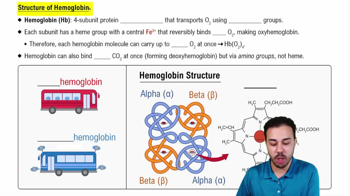
Iron is a critical component of hemoglobin, the protein in red blood cells responsible for oxygen transport. Each hemoglobin molecule contains iron atoms that bind oxygen, enabling efficient oxygen delivery to tissues. A deficiency in iron leads to reduced hemoglobin synthesis, causing anemia and decreased oxygen-carrying capacity.
Recommended video:
6:45
Structure of Hemoglobin

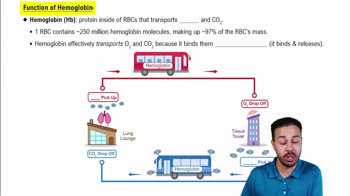
Function of Hemoglobin in Blood

Hemoglobin is a protein in red blood cells that carries oxygen from the lungs to body tissues and returns carbon dioxide for exhalation. Its structure includes iron-containing heme groups essential for oxygen binding. Proper hemoglobin levels are vital for maintaining adequate oxygen supply and overall metabolic function.
Recommended video:
7:52
Function of Hemoglobin

Impact of Nutrient Deficiencies on Blood Components

Deficiencies in certain nutrients can impair blood composition and function. While iron deficiency directly reduces hemoglobin, other elements like iodine (I), fluorine (F), calcium (Ca), and potassium (K) have different physiological roles and do not directly affect hemoglobin content. Understanding these distinctions helps identify causes of blood disorders.
Recommended video:
Guided course
5:04
Optic Components