Pearson+ LogoPearson+ Logo
Ch. 20 The Lymphatic System and Lymphoid Organs and Tissues
Marieb - Human Anatomy & Physiology 7th Edition
Elaine N. Marieb, Katja Hoehn7th EditionHuman Anatomy & PhysiologyISBN: 9780805359091Not the one you use?Change textbook
Chapter 19, Problem 16

Once almost a rite of childhood, tonsillectomy (surgical removal of the tonsils) is now rarely performed. Similarly, while ruptured spleens were once routinely removed, they are now conserved whenever possible. Why should these lymphoid organs be preserved when possible?

Verified step by step guidance
1
Step 1: Understand the primary function of lymphoid organs such as the tonsils and spleen. These organs play crucial roles in the immune system by helping to detect and fight infections through the production and activation of lymphocytes.
Step 2: Recognize that the tonsils act as the first line of defense in the throat area, trapping pathogens that enter through the mouth or nose, and initiating immune responses to prevent infections from spreading.
Step 3: Note that the spleen filters blood, removes old or damaged red blood cells, and helps mount immune responses against blood-borne pathogens by producing lymphocytes and antibodies.
Step 4: Consider the consequences of removing these organs. Their removal can weaken the body's ability to fight infections, making individuals more susceptible to illnesses, especially in early childhood when the immune system is still developing.
Step 5: Conclude that preserving these lymphoid organs whenever possible is important because they contribute significantly to immune surveillance and defense, reducing the risk of infections and supporting overall immune health.

Verified video answer for a similar problem:

This video solution was recommended by our tutors as helpful for the problem above.
Video duration:
2m
Was this helpful?

Key Concepts

Here are the essential concepts you must grasp in order to answer the question correctly.

Role of Lymphoid Organs in Immune Function

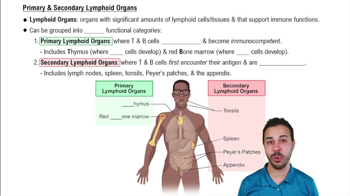
Lymphoid organs like the tonsils and spleen are critical components of the immune system. They help filter pathogens, produce immune cells, and initiate immune responses, thus protecting the body from infections.
Recommended video:
4:34
Primary & Secondary Lymphoid Organs

Consequences of Removing Lymphoid Organs

Surgical removal of lymphoid organs can impair immune function, increasing susceptibility to infections. For example, splenectomy raises the risk of severe bacterial infections, while tonsillectomy may reduce local immune defense.
Recommended video:
4:34
Primary & Secondary Lymphoid Organs

Advances in Medical Practice Favoring Organ Preservation

Modern medical approaches prioritize preserving lymphoid organs to maintain immune competence. Improved surgical techniques and better understanding of immune roles have shifted treatment from routine removal to conservation whenever possible.
Recommended video:
Guided course
02:22
Levels of Organization Example 1