Pearson+ LogoPearson+ Logo
Ch. 21 The Immune System: Innate and Adaptive Body Defenses
Marieb - Human Anatomy & Physiology 7th Edition
Elaine N. Marieb, Katja Hoehn7th EditionHuman Anatomy & PhysiologyISBN: 9780805359091Not the one you use?Change textbook
Chapter 20, Problem 26

Capillary permeability increases and plasma proteins leak into the interstitial fluid as part of the inflammatory process. Why is this desirable?

Verified step by step guidance
1
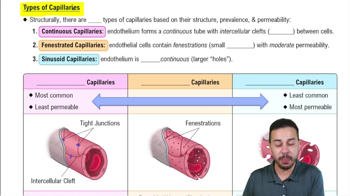
Understand that capillary permeability refers to the ability of substances to pass through the capillary walls from the blood into the surrounding tissues.
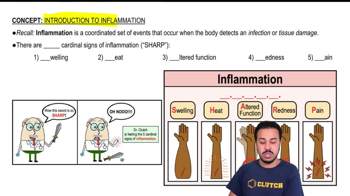
Recognize that during inflammation, increased capillary permeability allows plasma proteins, such as antibodies and clotting factors, to move from the bloodstream into the interstitial fluid.
Consider the role of these plasma proteins in the inflammatory response: they help to isolate the injured area, promote clotting to prevent the spread of infection, and attract immune cells to the site.
Realize that the leakage of plasma proteins also increases the osmotic pressure in the interstitial fluid, which helps to draw more fluid out of the capillaries, causing swelling that can help dilute toxins and bring immune cells closer to the affected tissue.
Conclude that this process is desirable because it facilitates the body's defense mechanisms by enabling immune cells and proteins to reach and act on the site of injury or infection effectively.

Verified video answer for a similar problem:

This video solution was recommended by our tutors as helpful for the problem above.
Video duration:
3m
Was this helpful?

Key Concepts

Here are the essential concepts you must grasp in order to answer the question correctly.

Capillary Permeability

Capillary permeability refers to the ability of small blood vessels to allow substances like fluids, ions, and proteins to pass through their walls. During inflammation, this permeability increases to enable immune cells and proteins to reach the affected tissue, facilitating the body's defense and repair mechanisms.
Recommended video:
9:42
Types of Capillaries

Role of Plasma Proteins in Inflammation

Plasma proteins such as fibrinogen and immunoglobulins leak into the interstitial fluid during inflammation. These proteins help form clots to contain infection, attract immune cells, and neutralize pathogens, thereby supporting the immune response and promoting tissue healing.
Recommended video:
1:38
Inflammation

Inflammatory Response and Tissue Repair

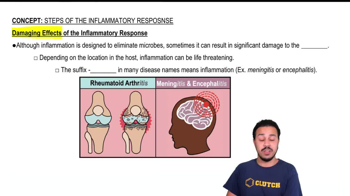
The inflammatory response is a protective mechanism that isolates and eliminates harmful agents. Increased capillary permeability and protein leakage create an environment that supports immune cell activity and tissue repair, making these changes essential for effective healing and restoration of normal function.
Recommended video:
2:10
Damaging Effects of the Inflammatory Response