Pearson+ LogoPearson+ Logo
Ch. 5 - Life in the Greenhouse
Belk, Maier - Biology: Science for Life 6th Edition
Belk, Maier6th EditionBiology: Science for LifeISBN: 9780135214084Not the one you use?Change textbook
Chapter 5, Problem 10

Select the true statement regarding metabolism in plant and animal cells.
a. Plant and animal cells both perform photosynthesis and aerobic respiration.
b. Animal cells perform aerobic respiration only, and plant cells perform photosynthesis only.
c. Plant cells perform aerobic respiration only, and animal cells perform photosynthesis only.
d. Plant cells perform cellular respiration and photosynthesis, and animal cells perform aerobic respiration only.

Verified step by step guidance
1
Understand the concept of metabolism: Metabolism refers to all chemical reactions that occur within a cell to maintain life. It includes processes like photosynthesis and cellular respiration.
Clarify the role of photosynthesis: Photosynthesis is a process performed by plant cells (and some other organisms like algae) to convert light energy into chemical energy stored in glucose. Animal cells do not perform photosynthesis because they lack chloroplasts.
Clarify the role of aerobic respiration: Aerobic respiration is a process performed by both plant and animal cells to break down glucose in the presence of oxygen, producing ATP (energy) for cellular activities.
Compare the metabolic processes in plant and animal cells: Plant cells perform both photosynthesis (to produce glucose) and aerobic respiration (to utilize glucose for energy). Animal cells perform aerobic respiration only, as they rely on consuming organic molecules for energy rather than producing them through photosynthesis.
Select the correct statement: Based on the above clarifications, the true statement is 'd. Plant cells perform cellular respiration and photosynthesis, and animal cells perform aerobic respiration only.'

Verified video answer for a similar problem:

This video solution was recommended by our tutors as helpful for the problem above.
Video duration:
33s
Was this helpful?

Key Concepts

Here are the essential concepts you must grasp in order to answer the question correctly.

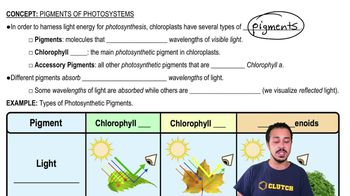
Photosynthesis

Photosynthesis is the process by which green plants, algae, and some bacteria convert light energy into chemical energy, specifically glucose, using carbon dioxide and water. This process occurs in chloroplasts and involves two main stages: the light-dependent reactions and the Calvin cycle. It is essential for producing oxygen and organic compounds that serve as energy sources for other organisms.
Recommended video:
Guided course
05:58
Pigments of Photosynthesis

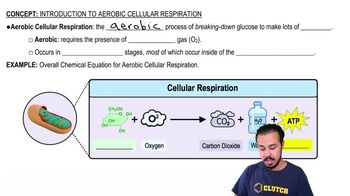
Cellular Respiration

Cellular respiration is a metabolic process that converts biochemical energy from nutrients into adenosine triphosphate (ATP), and releases waste products. This process occurs in both plant and animal cells and can be aerobic (requiring oxygen) or anaerobic (not requiring oxygen). Aerobic respiration is more efficient, producing more ATP compared to anaerobic pathways.
Recommended video:
Guided course
03:39
Introduction to Cellular Respiration

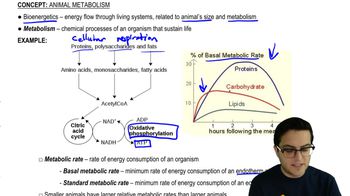
Metabolism in Plant and Animal Cells

Metabolism encompasses all chemical reactions that occur within living organisms to maintain life, including both anabolism (building up) and catabolism (breaking down). In plants, metabolism includes photosynthesis and cellular respiration, while animal cells primarily rely on cellular respiration for energy. Understanding the differences in metabolic pathways between these cell types is crucial for answering questions about their energy production.
Recommended video:
Guided course
07:08
Metabolic Rate