Pearson+ LogoPearson+ Logo
Ch. 10 - Eukaryotic Chromosome Abnormalities and Molecular Organization
Sanders - Genetic Analysis: An Integrated Approach 3rd Edition
Sanders3rd EditionGenetic Analysis: An Integrated ApproachISBN: 9780135564172Not the one you use?Change textbook
Chapter 10, Problem 7i

From the following list, identify the types of chromosome changes you expect to show phenotypic consequences.
Polyploidy

Verified step by step guidance
1
Understand the concept of polyploidy: Polyploidy refers to the condition in which an organism has more than two complete sets of chromosomes. For example, triploidy (3n) or tetraploidy (4n). This is different from the normal diploid state (2n).
Recognize how polyploidy can affect phenotypes: Polyploidy often leads to significant phenotypic consequences because it alters the dosage of genes. This can affect gene expression levels and disrupt normal cellular processes.
Consider examples in plants and animals: Polyploidy is common in plants and can lead to larger fruit sizes, increased vigor, or sterility. In animals, polyploidy is less common and often results in developmental abnormalities or lethality.
Analyze the genetic balance: The phenotypic consequences of polyploidy are often due to imbalances in gene expression caused by the extra sets of chromosomes. This can disrupt metabolic pathways and developmental processes.
Conclude that polyploidy typically results in phenotypic consequences: Based on the above points, polyploidy is expected to show phenotypic consequences due to its impact on gene dosage and expression.

Verified video answer for a similar problem:

This video solution was recommended by our tutors as helpful for the problem above.
Video duration:
1m
Was this helpful?

Key Concepts

Here are the essential concepts you must grasp in order to answer the question correctly.

Polyploidy

Polyploidy refers to the condition in which an organism has more than two complete sets of chromosomes. This can occur naturally, as seen in many plants, or can be induced artificially. Polyploidy can lead to significant phenotypic changes, such as increased size or altered growth patterns, due to the increased genetic material and potential for gene redundancy.
Recommended video:
Guided course
04:03
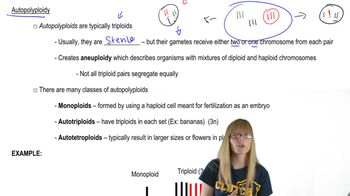
Autopolyploidy

Phenotypic Consequences

Phenotypic consequences are the observable traits or characteristics of an organism that result from the interaction of its genotype with the environment. Changes in chromosome number, such as those caused by polyploidy, can lead to variations in phenotype, affecting traits like morphology, physiology, and reproductive success.
Recommended video:
Guided course
10:48
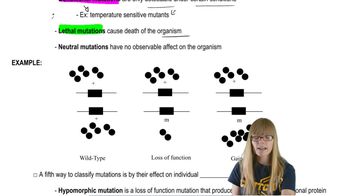
Mutations and Phenotypes

Chromosome Changes

Chromosome changes encompass various alterations in chromosome structure or number, including deletions, duplications, inversions, and aneuploidy. These changes can disrupt normal gene function and regulation, potentially leading to significant phenotypic effects. Understanding these changes is crucial for predicting how they might influence an organism's traits and overall fitness.
Recommended video:
Guided course
07:10
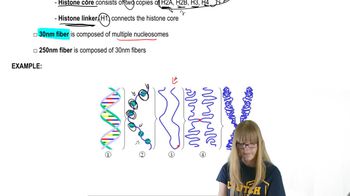
Chromosome Structure