Pearson+ LogoPearson+ Logo
Ch. 16 - Genomics: Genetics from a Whole-Genome Perspective
Sanders - Genetic Analysis: An Integrated Approach 3rd Edition
Sanders3rd EditionGenetic Analysis: An Integrated ApproachISBN: 9780135564172Not the one you use?Change textbook
Chapter 16, Problem 11

When comparing genes from two sequenced genomes, how does one determine whether two genes are orthologous? What pitfalls arise when one or both of the genomes are not sequenced?

Verified step by step guidance
1
Understand the concept of orthologous genes: Orthologous genes are genes in different species that evolved from a common ancestral gene through speciation. They typically retain similar functions across species.
Compare the sequences of the two genes: Use sequence alignment tools (e.g., BLAST) to compare the nucleotide or amino acid sequences of the genes. High sequence similarity is often indicative of orthology.
Analyze the phylogenetic relationship: Construct a phylogenetic tree using the sequences of the genes and their homologs from other species. Orthologous genes should cluster together based on their evolutionary history.
Consider synteny: Examine the genomic context of the genes (e.g., neighboring genes or conserved regions). Orthologous genes often reside in similar genomic locations across species.
Address pitfalls with incomplete genome sequencing: If one or both genomes are not fully sequenced, missing data can lead to incorrect identification of orthologs. Additionally, fragmented assemblies may obscure synteny or phylogenetic relationships, requiring careful interpretation and validation using additional data or methods.

Verified video answer for a similar problem:

This video solution was recommended by our tutors as helpful for the problem above.
Video duration:
2m
Was this helpful?

Key Concepts

Here are the essential concepts you must grasp in order to answer the question correctly.

Orthologous Genes

Orthologous genes are genes in different species that evolved from a common ancestral gene through speciation. They typically retain the same function across species, making them crucial for comparative genomics. Identifying orthologs helps in understanding evolutionary relationships and functional conservation.
Recommended video:
Guided course
09:09
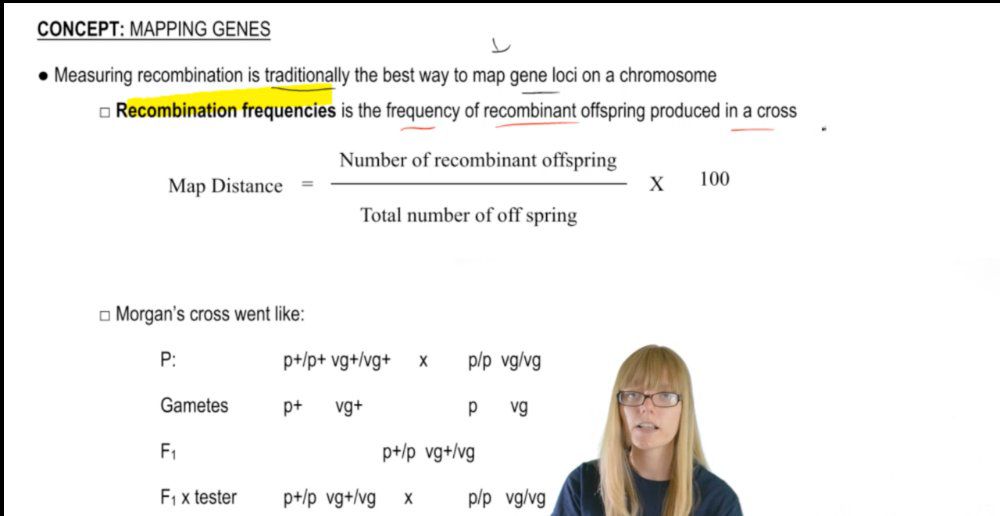
Mapping Genes

Genome Sequencing

Genome sequencing is the process of determining the complete DNA sequence of an organism's genome. Accurate sequencing is essential for identifying genes and their relationships. If one or both genomes are not sequenced, it can lead to incomplete data, making it difficult to accurately determine orthology.
Recommended video:
Guided course
08:41
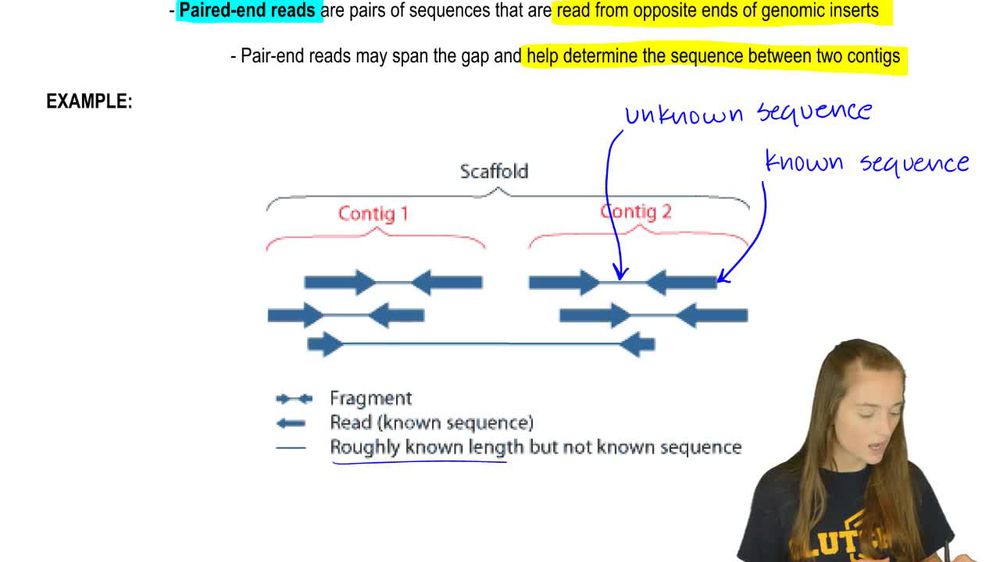
Sequencing Difficulties

Pitfalls in Comparative Genomics

Pitfalls in comparative genomics include misidentifying orthologs due to incomplete or erroneous genome data. Factors such as gene duplication, horizontal gene transfer, and sequencing errors can complicate the analysis. These issues can lead to incorrect conclusions about evolutionary relationships and gene functions.
Recommended video:
Guided course
02:48
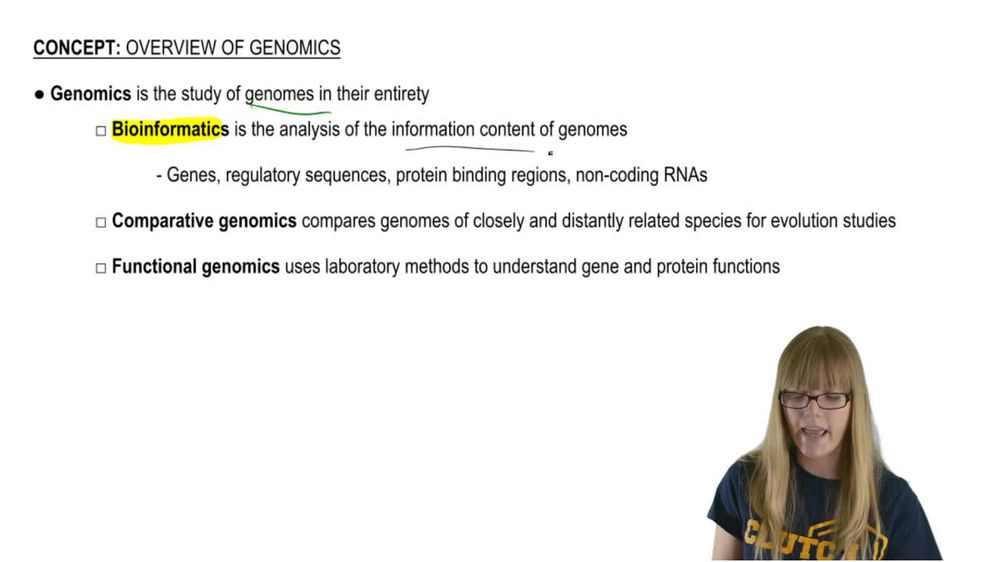
Genomics Overview
Related Practice
Textbook Question

You have just obtained 100 kb of genomic sequence from an as-yet-unsequenced mammalian genome. What are three methods you might use to identify potential genes in the 100 kb? What are the advantages and limitations of each method?

617
views
Textbook Question

The human genome contains a large number of pseudogenes. How would you distinguish whether a particular sequence encodes a gene or a pseudogene? How do pseudogenes arise?

621
views
Textbook Question

Based on the tree of life in the following figure (Figure 16.12), would you expect human proteins to be more similar to fungal proteins or to plant proteins? Would you expect plant proteins to be more similar to fungal proteins or to human proteins?

483
views
Textbook Question

What is a reference genome? How can it be used to survey genetic variation within a species?

611
views
Textbook Question

The two-hybrid method facilitates the discovery of protein–protein interactions. How does this technique work? Can you think of reasons for obtaining a false-positive result, that is, where the proteins encoded by two clones interact in the two-hybrid system but do not interact in the organism in which they naturally occur? Can you think of reasons you might obtain a false-negative result, in which the two proteins interact in vivo but fail to interact in the two-hybrid system?

404
views
Textbook Question

Go to http://blast.ncbi.nlm.nih.gov/Blast.cgi and follow the links to nucleotide BLAST. Type in the sequence below; it is broken up into codons to make it easier to copy.

5' ATG TTC GTC AAT CAG CAC CTT TGT GGT TCT CAC CTC GTT GAA GCTTTG TAC CTT GTT TGC GGT GAA CGT GGT TTC TTC TAC ACT CCT AAG ACT TAA 3'

As you will note on the BLAST page, there are several options for tailoring your query to obtain the most relevant information. Some are related to which sequences to search in the database. For example, the search can be limited taxonomically (e.g., restricted to mammals) or by the type of sequences in the database (e.g., cDNA or genomic). For our search, we will use the broadest database, the 'Nucleotide collection (nr/nt).' This is the nonredundant (nr) database of all nucleotide data (nt) in GenBank and can be selected in the 'Database' dialogue box. Other parameters can also be adjusted to make the search more or less sensitive to mismatches or gaps. For our purposes, we will use the default setting, which is automatically presented. Press 'BLAST' to search. What can you say about the DNA sequence?

428
views