Pearson+ LogoPearson+ Logo
Ch. 16 - Genomics: Genetics from a Whole-Genome Perspective
Sanders - Genetic Analysis: An Integrated Approach 3rd Edition
Sanders3rd EditionGenetic Analysis: An Integrated ApproachISBN: 9780135564172Not the one you use?Change textbook
Chapter 16, Problem 9

The human genome contains a large number of pseudogenes. How would you distinguish whether a particular sequence encodes a gene or a pseudogene? How do pseudogenes arise?

Verified step by step guidance
1
Understand the definition of pseudogenes: Pseudogenes are non-functional sequences in the genome that resemble functional genes but have lost their ability to encode proteins due to mutations or other changes.
To distinguish between a gene and a pseudogene, analyze the sequence for key features of functional genes, such as the presence of an intact open reading frame (ORF), regulatory elements (e.g., promoters), and splice sites. Pseudogenes often lack these features or have mutations disrupting them.
Perform comparative genomic analysis: Compare the sequence in question to known functional genes. Pseudogenes often show high sequence similarity to functional genes but may contain stop codons, frameshift mutations, or deletions that prevent proper protein synthesis.
Investigate transcriptional activity: Use techniques like RT-PCR or RNA sequencing to determine if the sequence is transcribed into RNA. Functional genes are typically transcribed, while pseudogenes may not be actively transcribed or produce non-functional RNA.
Understand how pseudogenes arise: Pseudogenes can originate through processes such as gene duplication followed by mutation (resulting in non-functional copies) or retrotransposition, where reverse-transcribed RNA is inserted back into the genome without proper regulatory elements.

Verified video answer for a similar problem:

This video solution was recommended by our tutors as helpful for the problem above.
Video duration:
1m
Was this helpful?

Key Concepts

Here are the essential concepts you must grasp in order to answer the question correctly.

Gene vs. Pseudogene

A gene is a sequence of DNA that encodes a functional product, typically a protein, while a pseudogene is a non-functional sequence that resembles a gene but has lost its ability to be expressed. Pseudogenes can arise from mutations that disrupt the coding sequence or regulatory elements necessary for gene expression, rendering them inactive.
Recommended video:
Guided course
09:09
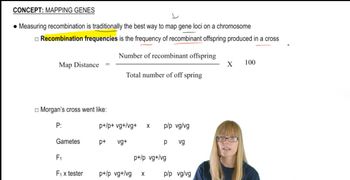
Mapping Genes

Functional Analysis

To distinguish between a gene and a pseudogene, functional analysis is crucial. This involves examining the sequence for features such as open reading frames (ORFs), promoter regions, and conservation across species. If a sequence lacks these features or shows signs of degradation, it is likely a pseudogene.
Recommended video:
Guided course
08:26
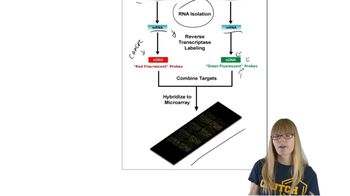
Functional Genomics

Mechanisms of Pseudogene Formation

Pseudogenes can arise through several mechanisms, including gene duplication, retrotransposition, and point mutations. Gene duplication creates a copy of a gene that may accumulate mutations over time, while retrotransposition involves the reverse transcription of mRNA into DNA, which can insert non-functional copies into the genome.
Recommended video:
Guided course
04:06
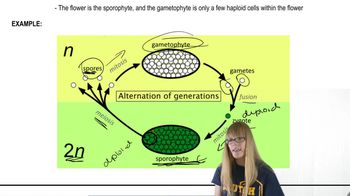
Formation of Plant Gametes