Shorter fragments of DNA (those with fewer base pairs) have a higher electrophoretic mobility than larger fragments. Thinking about electrophoresis gels as creating a matrix through which fragments must migrate, briefly explain why the size of a DNA fragment affects its electrophoretic mobility.

Sanders 3rd Edition
Ch. 1 - The Molecular Basis of Heredity, Variation, and Evolution
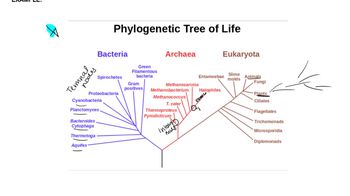
Problem 28If one is constructing a phylogeny of reptiles using DNA sequence data, which taxon (birds, mammals, amphibians, or fish) might be suitable to use as an outgroup?
Verified step by step guidance
Verified video answer for a similar problem:
Key Concepts
Phylogeny
Outgroup
DNA Sequence Data
Four nucleic-acid samples are analyzed to determine the percentages of the nucleotides they contain. Survey the data in the table to determine which samples are DNA and which are RNA, and specify whether each sample is double-stranded or single-stranded. Justify each answer.
[A table of nucleotide percentages appears below the problem]
What is meant by the term homology? How is that different from the meaning of homoplasmy?
Consider the following segment of DNA:
5'-...ATGCCAGTCACTGACTTG...-3'
3'-...TACGGTCAGTGACTGAAC...-5'
How many phosphodiester bonds are required to form this segment of double-stranded DNA?
Consider the following segment of DNA:
5'-...ATGCCAGTCACTGACTTG...-3'
3'-...TACGGTCAGTGACTGAAC...-5'
How many hydrogen bonds are present in this DNA segment?
Consider the following segment of DNA:
5'-...ATGCCAGTCACTGACTTG...-3'
3'-...TACGGTCAGTGACTGAAC...-5'
If the lower strand of DNA serves as the template transcribed into mRNA, how many peptide bonds are present in the polypeptide fragment into which the mRNA is translated?