
Pearson+ LogoPearson+ Logo
Ch. 12 - Regulation of Gene Expression in Bacteria and Bacteriophage
Sanders - Genetic Analysis: An Integrated Approach 3rd Edition
Sanders3rd EditionGenetic Analysis: An Integrated ApproachISBN: 9780135564172Not the one you use?Change textbook
Chapter 12, Problem 6

Is attenuation the product of an allosteric effect? Is attenuation the result of a transcriptional or a translational activity? Explain your answers.

Verified step by step guidance
1
Attenuation is a regulatory mechanism in prokaryotic gene expression, particularly in operons like the trp operon in bacteria.
It involves the premature termination of transcription, which is influenced by the formation of specific secondary structures in the mRNA.
Attenuation is not the product of an allosteric effect. Allosteric effects involve the binding of a molecule at a site other than the active site on a protein, often affecting enzyme activity.
Attenuation is primarily a transcriptional activity because it regulates the continuation of RNA polymerase along the DNA, affecting the transcription process.
In summary, attenuation is a transcriptional regulatory mechanism, not an allosteric effect, as it involves the formation of mRNA structures that influence transcription termination.

Verified video answer for a similar problem:

This video solution was recommended by our tutors as helpful for the problem above.
Video duration:
2m
Was this helpful?

Key Concepts

Here are the essential concepts you must grasp in order to answer the question correctly.

Attenuation

Attenuation is a regulatory mechanism in gene expression, particularly in prokaryotes, where the transcription of a gene is prematurely terminated. This process is influenced by the formation of specific RNA structures during transcription, which can be affected by the availability of certain metabolites. It serves as a way for cells to conserve resources by halting the production of proteins when they are not needed.
Recommended video:
Guided course
09:11
Trp Attenuation

Allosteric Effect

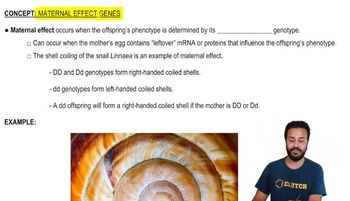
An allosteric effect refers to the regulation of a protein's function through the binding of a molecule at a site other than the active site, leading to a conformational change. This can enhance or inhibit the protein's activity, impacting processes such as enzyme function or receptor signaling. In the context of attenuation, allosteric effects can influence the formation of RNA structures that determine whether transcription continues or stops.
Recommended video:
Guided course
03:38
Maternal Effect

Transcriptional vs. Translational Regulation

Transcriptional regulation involves controlling the synthesis of RNA from DNA, determining which genes are expressed and to what extent. In contrast, translational regulation pertains to the control of protein synthesis from mRNA. Attenuation primarily acts at the transcriptional level by affecting the continuation of RNA synthesis, although it can also have implications for translation depending on the RNA structures formed.
Recommended video:
Guided course
07:58
Translation initiation