Pearson+ LogoPearson+ Logo
Ch. 13 - Regulation of Gene Expression in Eukaryotes
Sanders - Genetic Analysis: An Integrated Approach 3rd Edition
Sanders3rd EditionGenetic Analysis: An Integrated ApproachISBN: 9780135564172Not the one you use?Change textbook
Chapter 13, Problem 10

The term heterochromatin refers to heavily condensed regions of chromosomes that are largely devoid of genes. Since few genes exist there, these regions almost never decondense for transcription. At what point during the cell cycle would you expect to observe the decondensation of heterochromatic regions? Why?

Verified step by step guidance
1
Understand the concept of heterochromatin: Heterochromatin refers to tightly packed regions of DNA that are transcriptionally inactive due to their condensed structure. These regions are typically gene-poor and remain condensed throughout most of the cell cycle.
Recall the stages of the cell cycle: The cell cycle consists of interphase (G1, S, and G2 phases) and the mitotic phase (M phase). During interphase, the cell grows, replicates its DNA, and prepares for division.
Identify when chromatin decondensation occurs: Chromatin decondensation is necessary for processes like DNA replication and transcription. Euchromatin (less condensed chromatin) decondenses during interphase, particularly in the G1 and S phases, to allow access to the DNA. However, heterochromatin remains largely condensed during these phases.
Consider the role of heterochromatin during the cell cycle: Heterochromatin typically does not decondense significantly during the cell cycle because it is not actively involved in transcription. However, slight decondensation may occur during the S phase to allow for DNA replication.
Conclude the reasoning: The decondensation of heterochromatic regions is minimal and occurs primarily during the S phase of interphase, as this is when the entire genome, including heterochromatic regions, must be replicated. This decondensation is temporary and limited to facilitate replication machinery access.

Verified video answer for a similar problem:

This video solution was recommended by our tutors as helpful for the problem above.
Video duration:
3m
Was this helpful?

Key Concepts

Here are the essential concepts you must grasp in order to answer the question correctly.

Heterochromatin

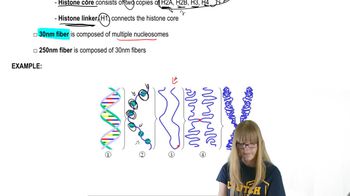
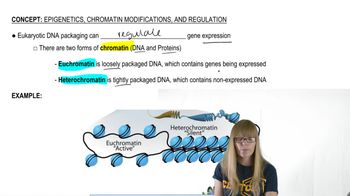
Heterochromatin is a tightly packed form of DNA that is transcriptionally inactive, meaning it does not typically participate in gene expression. It is characterized by its dense structure, which makes it less accessible for the transcription machinery. This form of chromatin plays a crucial role in maintaining chromosome stability and regulating gene expression by silencing certain genes.
Recommended video:
Guided course
07:10
Chromosome Structure

Cell Cycle

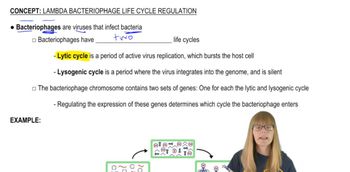
The cell cycle is the series of phases that a cell goes through as it grows and divides. It consists of interphase (G1, S, G2) and the mitotic phase (M). During interphase, the cell prepares for division, and it is during this time that chromatin undergoes changes in structure, including the potential decondensation of heterochromatin, particularly in preparation for DNA replication and transcription.
Recommended video:
Guided course
04:29
Bacteriophage Life Cycle

Chromatin Decondensation

Chromatin decondensation refers to the process by which tightly packed chromatin (heterochromatin) loosens to allow access for transcription factors and RNA polymerase. This typically occurs during the S phase of the cell cycle when DNA replication takes place, and also during the G1 phase when genes need to be expressed. Decondensation is essential for the activation of genes that are necessary for cell function and division.
Recommended video: