Pearson+ LogoPearson+ Logo
Ch. 14 - Analysis of Gene Function via Forward Genetics and Reverse Genetics
Sanders - Genetic Analysis: An Integrated Approach 3rd Edition
Sanders3rd EditionGenetic Analysis: An Integrated ApproachISBN: 9780135564172Not the one you use?Change textbook
Chapter 14, Problem 9

Discuss the advantages (and possible disadvantages) of the different approaches to reverse genetics.

Verified step by step guidance
1
Reverse genetics involves studying gene function by starting with a known gene and observing the effects of its alteration or disruption. Begin by understanding the three main approaches to reverse genetics: gene knockout, gene knockdown, and gene editing.
Step 1: Gene knockout involves completely removing or disrupting a gene to study its function. Discuss its advantages, such as providing clear insights into the gene's role, and disadvantages, such as potential lethality of the knockout, which can prevent further study.
Step 2: Gene knockdown uses techniques like RNA interference (RNAi) to reduce the expression of a gene. Highlight its advantages, such as being less invasive and reversible, and disadvantages, such as incomplete suppression of the gene, which may lead to ambiguous results.
Step 3: Gene editing, often using CRISPR-Cas9, allows precise modifications to the gene sequence. Explain its advantages, such as high specificity and versatility, and disadvantages, such as potential off-target effects and ethical concerns.
Step 4: Compare these approaches in terms of their applications, such as studying essential genes, creating disease models, or developing therapies, and discuss how the choice of method depends on the research question and organism being studied.

Verified video answer for a similar problem:

This video solution was recommended by our tutors as helpful for the problem above.
Video duration:
2m
Was this helpful?

Key Concepts

Here are the essential concepts you must grasp in order to answer the question correctly.

Reverse Genetics

Reverse genetics is a method used to understand the function of a gene by analyzing the phenotypic effects of specific gene sequences. This approach typically involves creating mutations in a gene of interest and observing the resulting changes in phenotype, allowing researchers to infer the gene's role in biological processes.
Recommended video:
Guided course
07:39
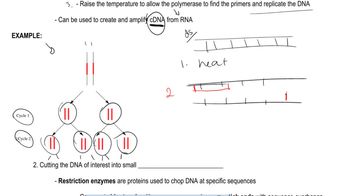
Genetic Cloning

Gene Targeting Techniques

Gene targeting techniques, such as CRISPR-Cas9 and homologous recombination, are essential tools in reverse genetics. These methods enable precise modifications to the genome, allowing scientists to knock out or modify specific genes. Each technique has its advantages, such as efficiency and specificity, as well as potential disadvantages, including off-target effects and ethical concerns.
Recommended video:
Guided course
09:09
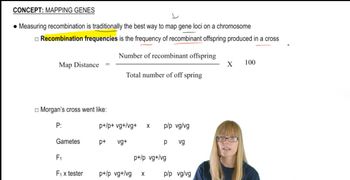
Mapping Genes

Phenotypic Analysis

Phenotypic analysis involves studying the observable traits or characteristics of an organism resulting from genetic modifications. This analysis is crucial in reverse genetics, as it helps researchers determine the functional consequences of gene alterations. Understanding the advantages and disadvantages of different phenotypic assessment methods is vital for accurately interpreting the results of reverse genetics experiments.
Recommended video:
Guided course
02:48
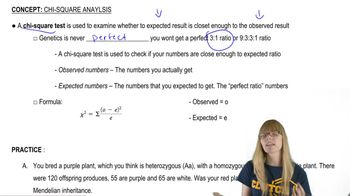
Chi Square Analysis