Textbook Question
What are the advantages and disadvantages of using insertion alleles versus alleles generated by chemicals (as in TILLING) in reverse genetic studies?
473
views

 Sanders 3rd EditionCh. 14 - Analysis of Gene Function via Forward Genetics and Reverse GeneticsProblem C.6c
 Verified step by step guidance
 09:12
09:12
 09:46
09:46 08:52
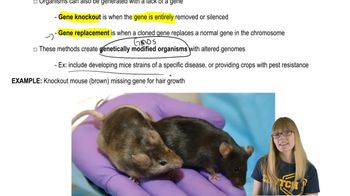
08:52What are the advantages and disadvantages of using insertion alleles versus alleles generated by chemicals (as in TILLING) in reverse genetic studies?
You have cloned the mouse ortholog of the gene associated with human Huntington disease (HD) and wish to examine its expression in mice. Outline the approaches you might take to examine the temporal and spatial expression pattern at the cellular level.
Diagram the mechanism by which CRISPR–Cas functions in the immune system of bacteria and archaea.
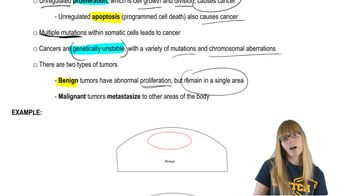
Explain the following processes involving chromosome mutations and cancer development.
How the chromosome mutation producing Burkitt lymphoma generates the disease.
Radiation is frequently used as part of the treatment of cancer. The radiation works by damaging DNA and components of the cell. Is there a risk of damage to noncancer cells?
Radiation is frequently used as part of the treatment of cancer. The radiation works by damaging DNA and components of the cell. How can radiation treatment control or cure cancer?