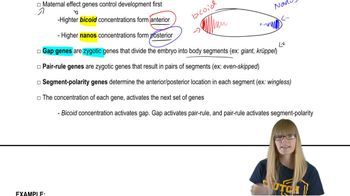
Homeotic genes are thought to regulate each other. What aspect of the phenotype of apetala2 agamous double mutants indicates that these two genes act antagonistically?

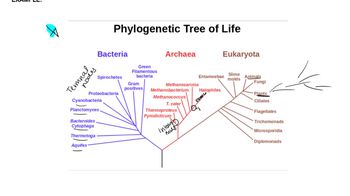
Basidiomycota is a monophyletic group of fungi that includes most of the common mushrooms. You are interested in the development of the body plan of mushrooms. How would you identify the genes required for patterning during mushroom development?
Verified step by step guidance
Verified video answer for a similar problem:
Key Concepts
Monophyly and Phylogenetic Context
Gene Identification Techniques in Developmental Biology
Body Plan Patterning in Fungi
Homeotic genes are thought to regulate each other. Are similar interactions observed between Hox genes?
Dipterans (two-winged insects) are thought to have evolved from a four-winged ancestor that had wings on both T2 and T3 thoracic segments, as in extant butterflies and dragonflies. Describe an evolutionary scenario for the evolution of dipterans from four-winged ancestors. What types of mutations could lead to a butterfly developing with only two wings?
Zea mays (maize, or corn) was originally domesticated in central Mexico at least 7000 years ago from an endemic grass called teosinte. Teosinte is generally unbranched, has male and female flowers on the same branch, and has few kernels per 'cob,' each encased in a hard, leaf-like organ called a glume. In contrast, maize is highly branched, with a male inflorescence (tassel) on its central branch and female inflorescences (cobs) on axillary branches. In addition, maize cobs have many rows of kernels and soft glumes. George Beadle crossed cultivated maize and wild teosinte, which resulted in fully fertile F₁ plants. When the F₁ plants were self-fertilized, about 1 plant in every 1000 of the F₂ progeny resembled either a modern maize plant or a wild teosinte plant. What did Beadle conclude about whether the different architectures of maize and teosinte were caused by changes with a small effect in many genes or changes with a large effect in just a few genes?
In C. elegans there are two sexes: hermaphrodite and male. Sex is determined by the ratio of X chromosomes to haploid sets of autosomes (X/A). An X/A ratio of 1.0 produces a hermaphrodite (XX), and an X/A ratio of 0.5 results in a male (XO). In the 1970s, Jonathan Hodgkin and Sydney Brenner carried out genetic screens to identify mutations in three genes that result in either XX males (tra-1, tra-2) or XO hermaphrodites (her-1). Double-mutant strains were constructed to assess for epistatic interactions between the genes (see table). Propose a genetic model of how the her and tra genes control sex determination.
In Drosophila, recessive mutations in the fruitless gene (fru) result in males courting other males, and recessive mutations in the Antennapedia gene (Ant⁻) lead to defects in the body plan, specifically in the thoracic region of the body, where mutants fail to develop legs. The two genes map 15 cM apart on chromosome 3. You have isolated a new dominant Antdᵈ mutant allele that you induced by treating your flies with X-rays. Your new mutant has legs developing instead of antennae on the head of the fly. You cross your newly induced dominant Antᵈ mutant (a pure-breeding line) with a homozygous recessive fru mutant (which is homozygous wild type at the Ant⁺ locus), as diagrammed below:
What phenotypes, and in what proportions, do you expect in the F₂ obtained by interbreeding F₁ animals?
